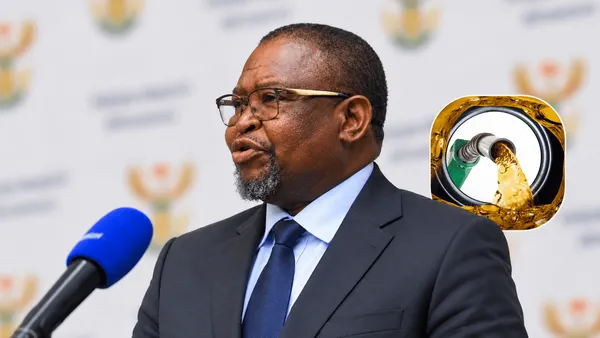
For two months, part of the tax on every litre of fuel is coming off. The fuel levy is a fixed amount the government adds per litre, on top of what the fuel itself costs, and Finance Minister Enoch Godongwana cut it in his mini-budget on 21 October.
From 4 November until 1 December the levy drops by R1.50 a litre on petrol and R3 on diesel. After that the cut gets smaller: diesel keeps half of it and petrol two-thirds, until the relief ends on 5 January. Godongwana told Parliament he was "aware of the pressure that rising fuel prices are placing on households and businesses", and said the government could afford to help "because we have rebuilt fiscal buffers". BusinessTech puts the package at R10 billion.
Why November barely moves the pump price
A smaller levy is not the same thing as a cheaper litre. By mid-October petrol was under-recovering by R1.27 to R1.38 a litre, meaning the pump price was not covering costs, and a gap like that usually becomes a price increase in the new month. BusinessTech's projection is that the relief turns that increase into a small cut on petrol, with a margin of only 12 to 23 cents a litre. The Central Energy Fund's daily snapshots behind it are not predictive, though, and a weaker rand or dearer oil could still tip petrol back into an increase.
The relief does not undo the year, either. Petrol has gone up by more than R10 a litre since February and diesel by almost R15. Even with the November cut, BusinessTech projects inland 95 petrol staying just above R30 a litre, which avoids a new record high and not much else.
Oil closed its week at the highest level since 2022
Oil is moving the other way. Brent crude, the international benchmark, jumped 6.2% last week to its highest weekly close since mid-2022, as Houthi attacks in Saudi Arabia stoked worries about supply. It eased on Monday to $114.88 a barrel as Qatari mediators visited Tehran, but it is still up almost 90% this year. The rand, meanwhile, is sitting around R16.50 to the dollar.
No forecast for December's pump price has been published. It will be set with half the diesel relief and a third of the petrol relief already gone, and on 5 January the rest goes too.