
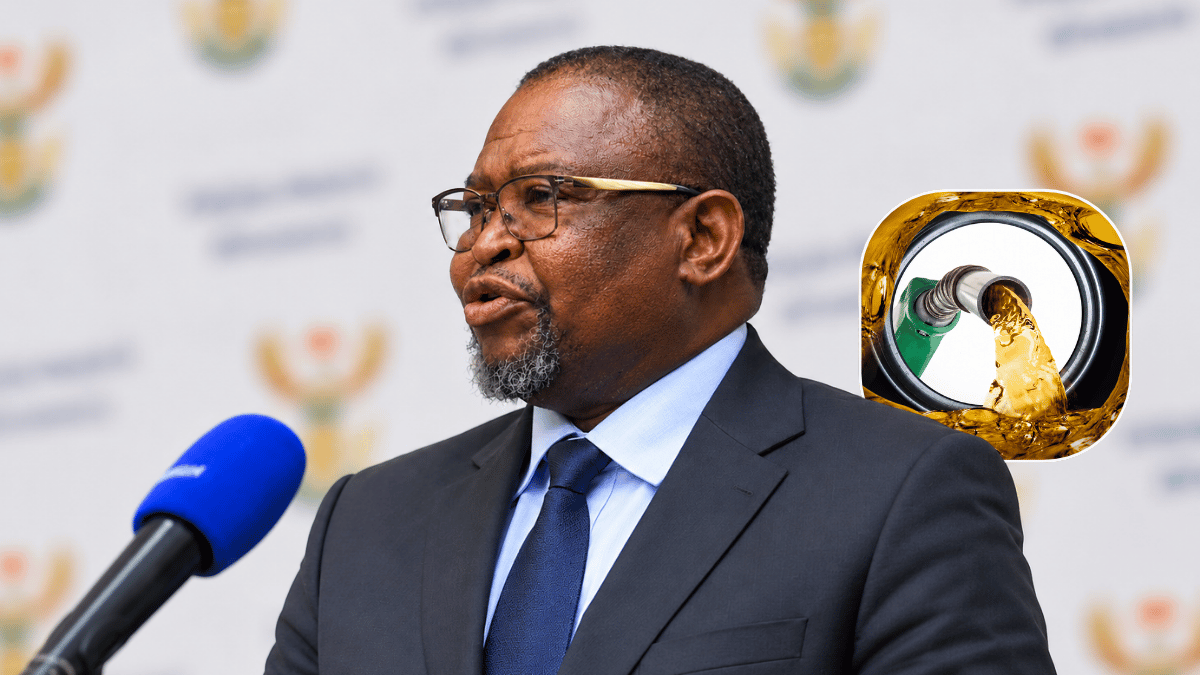
There’s been a lot said about the mini-budget Finance Minister Enoch Godongwana tabled on Wednesday, so here is what you actually need to know. On one side, government has found another R10 billion in relief for South Africans dealing with rising petrol and diesel prices, and how it found that money is the more important part of the story.
On the other side is debt, which has finally stopped growing faster than the economy. But what is still missing is a firm limit Treasury has to stick to.
Three ways to pay for cheaper fuel
When fuel prices started climbing earlier this year, there were really only three ways to deal with it. Motorists could swallow the increases, government could cut spending somewhere else, or it could borrow more. This time, government went with option two.
The money is R10 billion that had already been transferred to the Central Energy Fund, the state fund that helps government manage pressures in the energy sector. Treasury is taking it back, putting it into its emergency reserve and using it to cover the fuel levy it will no longer collect. Godongwana says that eases the cost of living “without compromising the sustainability of the budget”.
The trade-off is that the Central Energy Fund now has R10 billion less for the job it was first given, so relief at the pump today may push another energy problem further down the road. It is also the second round of relief this year: Moneyweb counts three months of levy cuts earlier in 2026, which had already cost about R17.2 billion in revenue.
What changes at the pump
The fuel levy is a fixed tax built into every litre of petrol or diesel you buy. From 4 November until 1 December it drops by R3 a litre on diesel and R1.50 on petrol. After that, a smaller cut of R1.50 on diesel and R1 on petrol runs until 5 January.
But that doesn’t necessarily mean motorists will pay less at the pump. The fuel levy is only one part of the price, and with fuel prices hitting record highs in October and further increases expected in November, the cuts may simply soften the blow. It’s easy to see why government has made fuel a priority: September’s inflation figures showed overall prices rising 4.5% compared to a year earlier, while transport costs climbed 10.8%. Food prices, meanwhile, barely moved.
Debt has stopped outrunning the economy
The other big takeaway from Wednesday’s mini-budget is that government’s finances are finally looking healthier. For the first time in almost 20 years, government debt has stopped growing faster than the economy, a significant milestone considering how much South Africa has borrowed just to keep things running.
Government debt has now stabilised at 78.4% of GDP, meaning South Africa owes the equivalent of almost 80% of everything its economy produces in a year. That’s still an enormous amount, but Treasury expects that figure to start declining. There are also signs of improvement in the budget deficit, which is now expected to come in at 3.9% of GDP this year, slightly better than the 4% forecast in February.
The problem is that South Africa is still spending around R1.2 billion every day just paying interest on that debt, before paying back anything it borrowed, by Sunday World’s sums. And with Treasury lowering its growth forecast from 1.6% to 1.2%, growing out of that debt is going to be harder than expected.
The limit Treasury has not set
On the upside, All Weather Capital’s Nick van Rensburg sees encouraging changes in government spending - particularly the shift towards infrastructure - which could stimulate economic growth. But his colleague, fixed income trader Batheeng Mashoeshoe, says one important thing is still missing: a clear fiscal anchor. That is essentially a limit government sets for itself, like committing to keep debt below a certain percentage of GDP.
Treasury has promised to be more disciplined with its finances, but has not committed to a number. There is a big difference between intending to keep your finances under control and setting a firm limit you are expected to stick to.
Why 27 November matters
That missing commitment could matter sooner than you think. On 27 November, Moody’s and S&P are scheduled to review South Africa’s credit rating, with a potential upgrade on the cards. An upgrade would bring the country another step closer to escaping junk status, potentially lowering government’s borrowing costs and the knock-on effects that come with that.
Mashoeshoe believes the agencies should welcome the progress, especially around stabilising debt. But before he would be confident about an upgrade, he wants to see three things: a firm, measurable fiscal anchor, future revenue windfalls used to reduce debt, and faster economic growth.
Views quoted from All Weather Capital are their own and not financial advice. All Weather Capital is an Authorised Financial Services Provider (FSP 36722). Full disclosures are available at allweathercapital.co.za.


