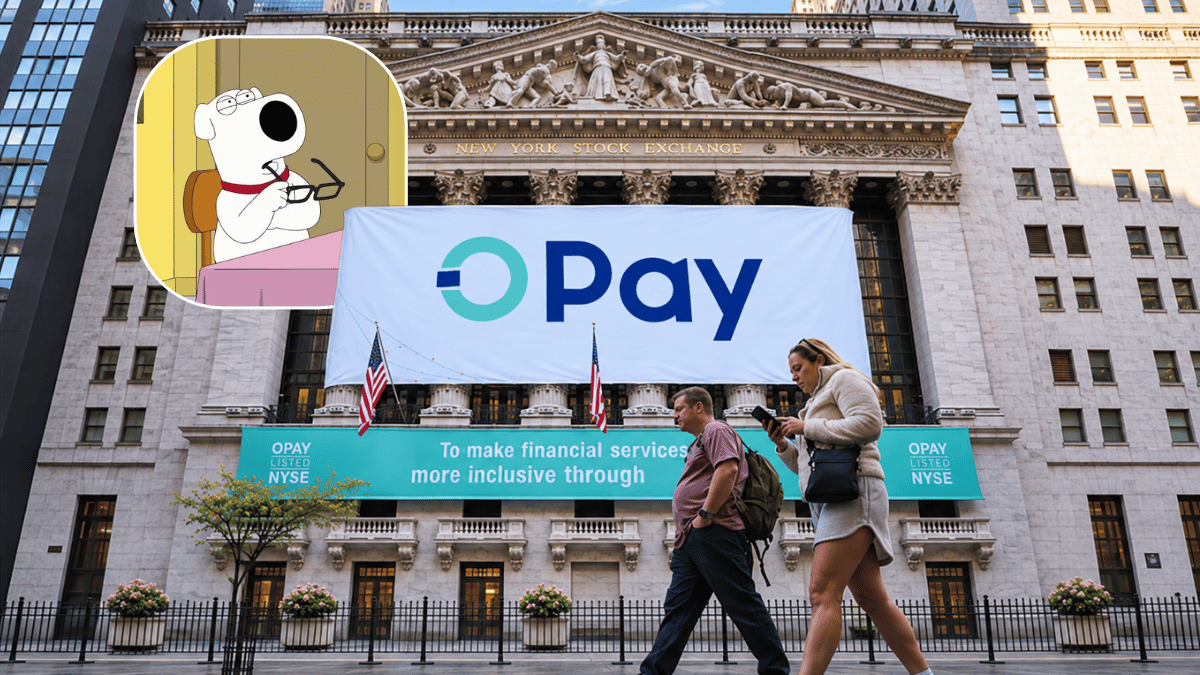
OPay, a digital payments company that launched in Nigeria in 2018, priced 16 million American depositary shares, certificates that trade in the US and stand for shares in a foreign company, at $19 each on Friday 30 October, raising $304 million and valuing the company at about $4 billion. Those shares never traded.
That day the New York Stock Exchange's feed showed a trading halt with news pending, and according to Bloomberg the shares had been indicated to open between $16.25 and $16.75, below the price they had just been sold at. Then OPay said it and its underwriters, the banks that organise the sale, had mutually agreed to terminate the underwriting agreement.
An inquiry with no name
OPay's reason was a regulatory inquiry in a foreign jurisdiction it did not identify. It described that jurisdiction as "immaterial to the Company's core business operations", and said the inquiry "should not be misconstrued as a reflection on the company's business performance, financial condition, operational integrity or regulatory standing". It expects the matter to be resolved satisfactorily in the near future.
The business behind the listing is not a struggling one. Headquartered in Singapore but built on Nigeria, which produced 89.5% of its revenue in the first half of 2026, OPay more than doubled revenue to $467.1 million in those six months and made $90.9 million in net income. It serves more than 50 million users across Nigeria, Egypt, Pakistan and Indonesia, and it counts Japan's SoftBank among its backers.
The $200 million Standard Bank had lined up
South Africa's interest runs through Standard Bank. The Standard Bank of South Africa was one of the joint book-running managers, the banks that run the sale. Separately, Stanbic Africa Holdings, another company in the group, had agreed to take as much as $200 million of OPay's shares in a private placement alongside the listing, subject to the offering going ahead and to regulatory approval. Lungisa Fuzile, who runs Standard Bank's Africa Regions business and was once director-general of the national treasury, was due to join OPay's board once the placement closed.
"Together we see potential to expand access to financial services, support cross-border commerce and deliver value to clients across Africa," Standard Bank Group chief executive Sim Tshabalala said when the deal was announced in October. OPay had also planned to let Nigerian investors in through a second listing on the Nigerian Exchange. For now, the shares it priced at $19 have no market in either city.