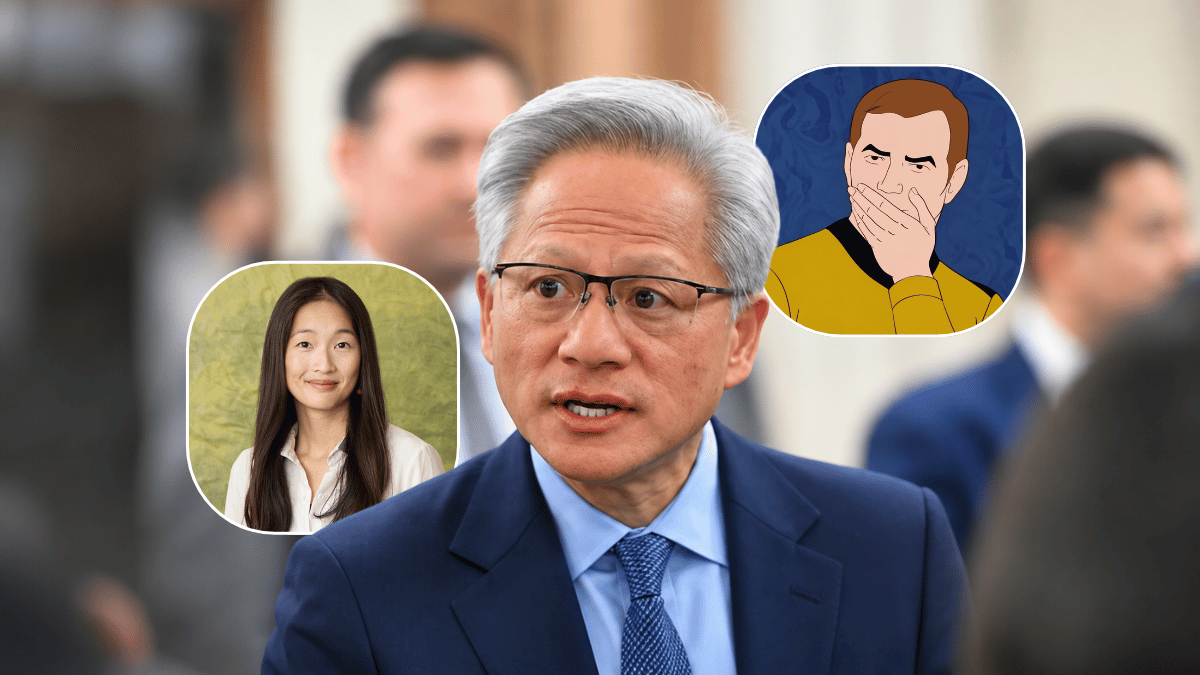
Nvidia's founder and CEO, Jensen Huang, sent an email to his employees on Sunday admitting he had been unfaithful to his wife. By Monday, the company's share price had fallen about 4.3%, wiping roughly $192 billion off its market value. So why would that kind of news hit one of the most valuable companies in the world so hard? Because the same day, Nvidia's board opened an independent investigation after reports that Huang had been the target of a foreign intelligence effort.
Who is Alice Huang?
The New York Times reported last month that Huang had a relationship with Alice Huang, a former executive at Megaspeed, a Singapore-based company that buys Nvidia's chips. Despite sharing a surname, the two aren't related. According to the newspaper, US authorities investigated her and concluded she was a Chinese intelligence asset. Huang's email to staff doesn't name anyone. Republican lawmakers have since asked him to brief the House foreign affairs and intelligence committees behind closed doors next week.
And here's why that matters. Nvidia makes the advanced chips powering much of the AI boom, and national security concerns have led to strict US export controls that effectively stop it selling its top-tier processors to customers in China. US intelligence officials reportedly believe Alice Huang was recruited to gather intelligence on Jensen Huang and influence his position on those controls. The New York Times also reported that President Donald Trump was briefed on the findings about a year ago and chose not to act, and on Monday Trump said the FBI was looking into the matter.
What the board and investors are doing
Nvidia's board says a committee of independent directors, assisted by outside counsel, will oversee the investigation. It says it has no reason to believe national security or company secrets were compromised, and that it has confidence in Huang. Huang, for his part, says he supports the investigation and will cooperate fully.
Shareholders are already feeling it. Nvidia became the first company in the world to pass $5 trillion in market value last year, and it makes up roughly 7% of the S&P 500, so its moves ripple well beyond its own investors. Nvidia's shares fell as much as 8.8% shortly after Monday's opening bell before recovering some ground, even as the rest of Wall Street rallied. A lawsuit filed in California on Monday accuses Nvidia and Huang of misleading investors about his ties to Megaspeed, and at least four law firms have announced investigations of their own. Because damages in cases like this are tied to how far the share price falls, a settlement could prove very expensive.
With so much of Nvidia's success tied to its founder, investors are now watching closely to see whether the investigation could threaten his position as CEO. One analyst says the company's AI ambitions are heavily tied to Huang staying on, while Citi says the key question is whether the probe uncovers anything more serious. The next test comes soon, with Nvidia's quarterly results due on 17 November.