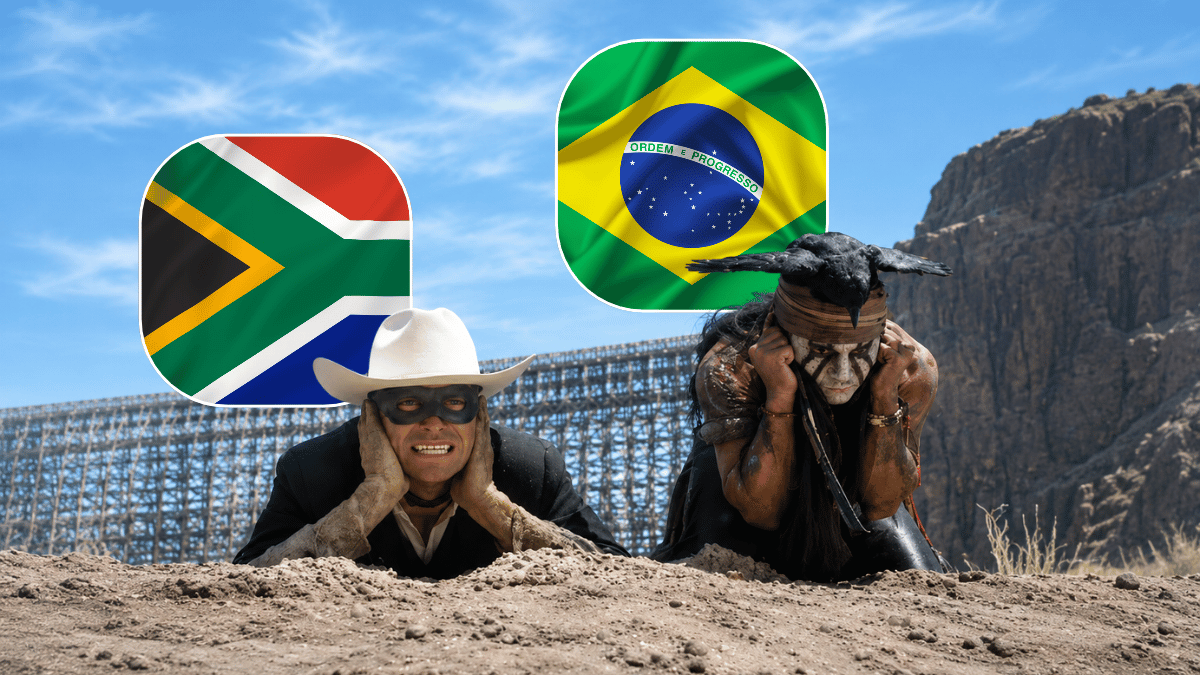
Shoot first, ask questions later. It's the oldest rule in the Wild West, and it turns out to be a pretty good description of how a lot of foreign investors are treating South Africa right now. To understand why, All Weather Capital says we need to go back just over three weeks, to Brazil.
How Brazil's markets paid for the wrong bet
Heading into the final vote of its presidential election, right-wing candidate Flavio Bolsonaro, the son of former president Jair Bolsonaro, was the clear favourite after leading the first round, with betting markets giving him better than a 75% chance of winning. But President Lula pulled off a surprise, winning roughly 52% to 48%, a margin of more than four million votes
The markets did not take it well. On the Monday after the vote, Brazil's currency dropped 12% against the dollar, and its main stock index fell 10% so quickly that it triggered a circuit breaker and halted trading for 30 minutes. That wiped out a rally from earlier in the month, when investors had piled in expecting a shift to the right. A US-listed fund tracking Brazilian shares lost a quarter of its value before the market even opened. Investors had priced in one outcome and got the other, and they paid for it. So when our own politics took an unexpected turn, plenty of them weren't about to get caught out twice.
Now fast forward to this week, and South Africa caught the next bullet. The ANC and ActionSA are edging closer to a coalition deal that could shut the DA out of Gauteng's three metros, even though the DA emerged as the biggest party in all three. These are local government talks, but several members of the ANC's national executive committee reportedly see the DA as a partner of last resort, which raises questions about the two parties' relationship nationally. On Wednesday, the JSE tumbled more than 3.6%, with resources shares down 6% and financials almost 4%. The rand closed at its weakest level against the dollar in a year, and slid as far as R17.35 early on Thursday.
Why good companies get sold with the bad
In fairness, not all of that was about the coalition. A hawkish release from the US Federal Reserve sent the dollar surging against most of the world’s currencies this week, and the rand got caught in the crossfire. But All Weather Capital believes foreign investors have their own reason to be jumpy. As we saw in Brazil, when political uncertainty creeps in, foreign investors tend to sell first and ask questions later. And when they do, they don’t pick and choose. They simply sell the shares they own, regardless of whether the companies behind them are good or bad, cheap or expensive.
That's why a lot of local companies fell 5%, 6% or 7% on Wednesday without anything changing at the businesses themselves. What changed, the team says, was the discount rate investors apply and the level of fear in the market. In other words, on All Weather's reading, fear did the selling, not fundamentals. And in times of stress, All Weather says, share prices can drift much further than usual from what companies are really worth over the long term.
In the Wild West, the questions always came after the shooting. For South Africa, the question now is whether the coalition talks give investors a reason to holster their guns, or to keep firing.
Views quoted from All Weather Capital are their own and not financial advice. All Weather Capital is an Authorised Financial Services Provider (FSP 36722). Full disclosures are available at allweather.co.za.