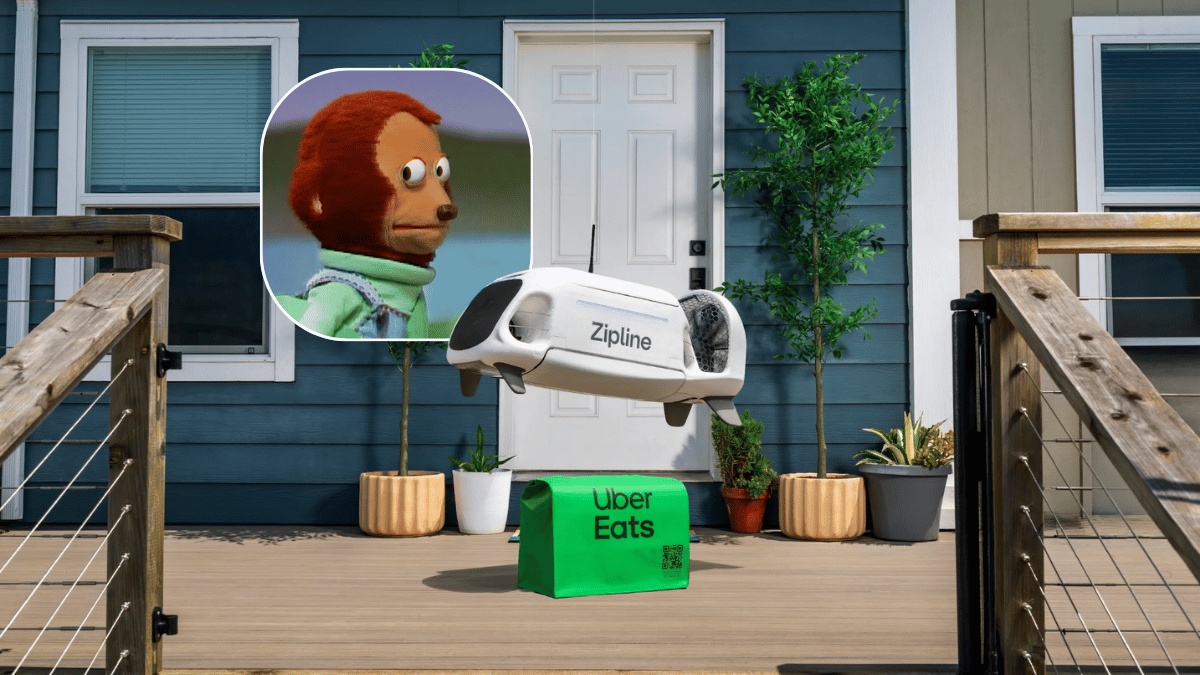
Uber and Zipline announced a partnership on Monday to bring autonomous drone delivery to Uber Eats customers across the United States, with Uber also making a strategic investment in the drone company. Neither side put a number on the investment, and Uber declined to give Reuters one. The first deliveries start later this year in Zipline's existing markets, before the service spreads to dozens more American cities.
What Zipline already does
Zipline is not a prototype looking for a runway. It operates on four continents, serves more than 5,000 hospitals and health facilities, and has flown more than 135 million commercial autonomous miles. Its overseas network runs through Rwanda, where it started in 2016 delivering medical supplies to remote clinics, and on into Ghana, Nigeria, Kenya and Japan. Somewhere in that network, a delivery lands every 20 seconds. In the United States it already flies for Walmart and more than a dozen restaurant brands including Panera, Chipotle and Wendy's, and it closed an extended funding round of $800 million earlier this year at a $7.6 billion valuation.
Why Uber wants it
Uber describes what it is building as a hybrid delivery network that mixes couriers, sidewalk robots and drones, then picks whichever mode suits the order. Chief executive Dara Khosrowshahi says the two companies are creating a faster, more sustainable way for people to get what they need, and that he wants autonomous delivery to become part of everyday life. He put the commercial case more plainly to the Wall Street Journal: quick commerce is proving to be an even bigger market than the original food market was, and can be an enormous tailwind for the next leg of growth for Eats. Uber reckons a Zipline drone can fill an Uber Eats order in five to 10 minutes.
This is not Uber's first drone deal. It partnered with Israeli startup Flytrex, which also came with an investment. Nor is it the only company chasing the market: DoorDash launched a drone programme of its own last month after clearance from the Federal Aviation Administration, which has proposed new rules to widen drone delivery operations. The target the two partners have set themselves is one million drone deliveries a day by the end of 2029.