
Today’s edition
Levy Breaks
Presented by
Good morning, and welcome to your Wednesday Roundup. Petrol has broken through R30 a litre in Gauteng, and now the question is whether government should give up some of its own cut to bring it back down. We’ve also got 2 very different R10 billion insurance deals, a flying Sasol share price, and a rand that can’t quite decide whether it’s having a good year or a bad one. Let’s get into it.
MARKETS
TANKS FOR NOTHING
Unions want the state to take a smaller slice of every litre now that petrol costs R30
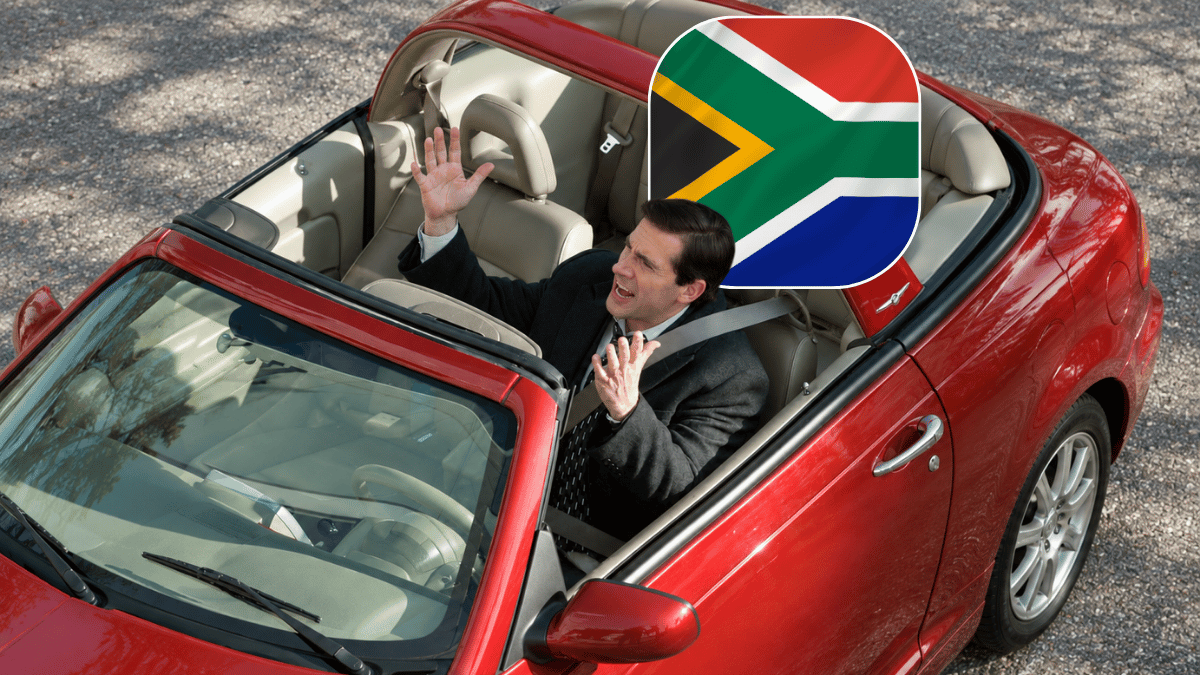
Before a litre of petrol gets anywhere near your tank, the state has already taken R4.10 of it through the General Fuel Levy. With 95 petrol now costing R30.25 a litre in Gauteng, MISA wants government to temporarily knock at least R3 off that levy.
We’ve actually tried this before. Government temporarily cut R3 from the levy in April, before gradually bringing it back to the full R4.10 by July. The problem is that the relief cost the state an estimated R17.2 billion in lost tax revenue. Take billions out of one place and government eventually has to cut spending, raise another tax or borrow the money instead.
But leaving it there also has a cost:
- Motorists. They’re currently paying more than R30 a litre for petrol in Gauteng, with R4.10 of every litre going towards the levy.
- Businesses. Fuel can account for between 35% and 55% of a road-freight company’s operating costs. Higher fuel bills eventually get passed through the businesses moving and buying goods.
- Shoppers. Those trucks carry everything from food and clothes to building materials. If moving those goods becomes more expensive, someone eventually has to absorb it, including the person buying them.
Businesses were already feeling the squeeze before the latest increase. South Africa’s private-sector PMI fell from 50.5 in August to 49 in September, with S&P Global pointing to higher fuel prices as the main driver of rising purchase costs.
So this isn’t really a question of government simply giving motorists R3 back. It’s about where that R3 does the least damage: collected as tax, or left with the motorists and businesses currently paying more than R30 a litre for petrol.
MINORITY REPORT
Sanlam already controls Santam, and it is still offering R505 a share to buy out everyone else
Most takeovers are about gaining control. This one isn’t. Sanlam already owns 62.7% of Santam, South Africa’s leading general insurer, but it has now offered R505 a share in cash to buy out everyone else. If the deal goes through, Sanlam will own Santam outright and the insurer will leave the JSE after 62 years.
Sanlam is also willing to pay up for the remaining shares. Its R505 offer is a 26.6% premium to Santam’s closing price before the deal was announced. Santam shares jumped to R475 after the news, but still finished below the offer. Sanlam CEO Paul Hanratty says full ownership would remove duplicated listing costs and make it easier for the group to decide where to allocate its capital.
But Sanlam can’t simply force the deal through. Santam’s independent board unanimously supports the offer, but the deal still needs approval from 75% of the votes cast by eligible minority shareholders. If they agree and the remaining conditions are met, one of South Africa’s biggest insurers could disappear from the JSE in early 2027.
BAGEL BITE
What is the longest mountain range on land?
A. Himalayas
B. Rockies
C. The Andes
DOING THE ROUNDS
OUTsurance has spent four years simplifying how it is owned, and the last piece belongs to its own people. About 7% of OUTsurance Holdings, which owns the group's insurers in South Africa, Australia and Ireland, sits with an original founder, executives, managers and staff. OUTsurance Group wants that stake, worth roughly R10.2 billion, and will pay in new listed shares rather than cash. Chief executive Marthinus Visser is one of the holders. So the deal goes to a vote of the other shareholders at the AGM on 24 November. Full story →
Sasol makes most of its fuel from coal, and this year that has been worth a great deal. It leaves the company leaning far less on the Middle East crude caught up in the Iran conflict. By Bloomberg's count it is the best-performing stock in the developing world outside Asia this year, up almost 120% in dollars and on track for its best year since at least 1991. It still won't pay a dividend until net debt drops below $3 billion. Full story →
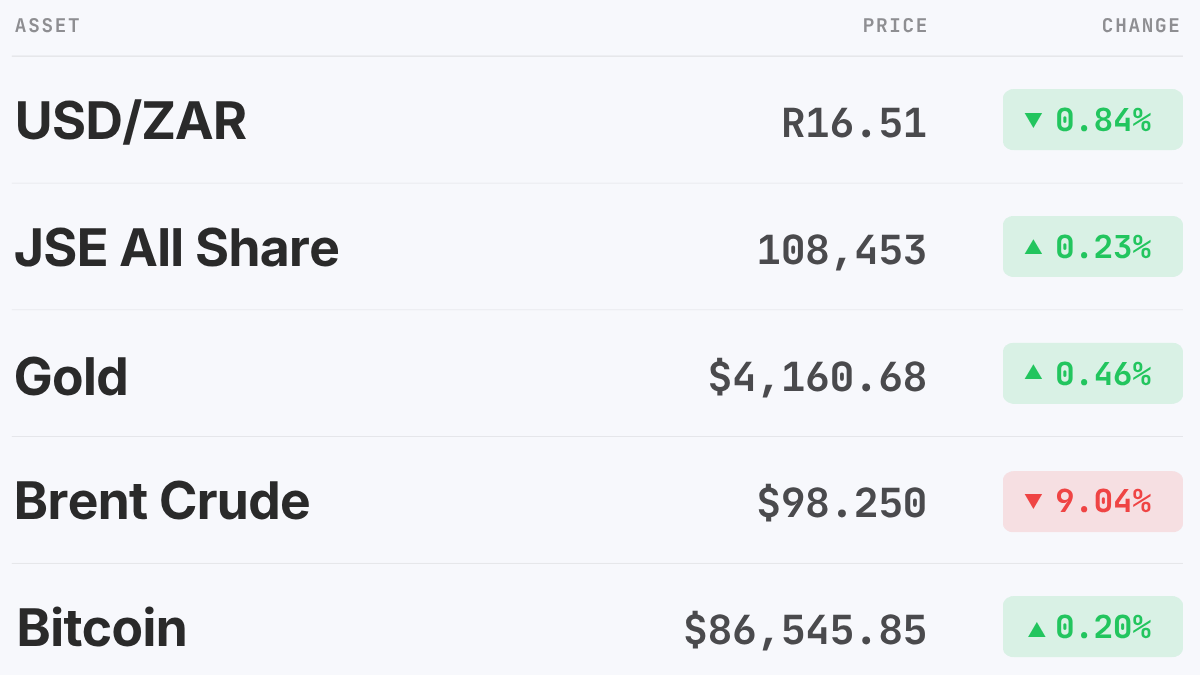
The rand is having a rough few weeks against the dollar and a decent year against the euro. It slipped to around R16.67 to the dollar on Monday, near its weakest since the end of July, as rising returns on US government bonds pull money toward American assets and away from places like South Africa. The euro has it worse, sliding to a 17-month low on worries about France's debt. A year ago a euro cost more than R20. On Monday it cost R18.67. Full story →
Ask ChatGPT to draw you a picture, and soon an advertiser may want to show you one too. OpenAI will start testing a visual ad format during image generation later this month, in the US only, with a first group of advertisers. Until now its ads were a name, a logo and a link under the chat. The new ones will be labelled and kept apart from your image, and OpenAI says they won't change ChatGPT's answers. Plus, Pro and Enterprise subscribers see none. Full story →
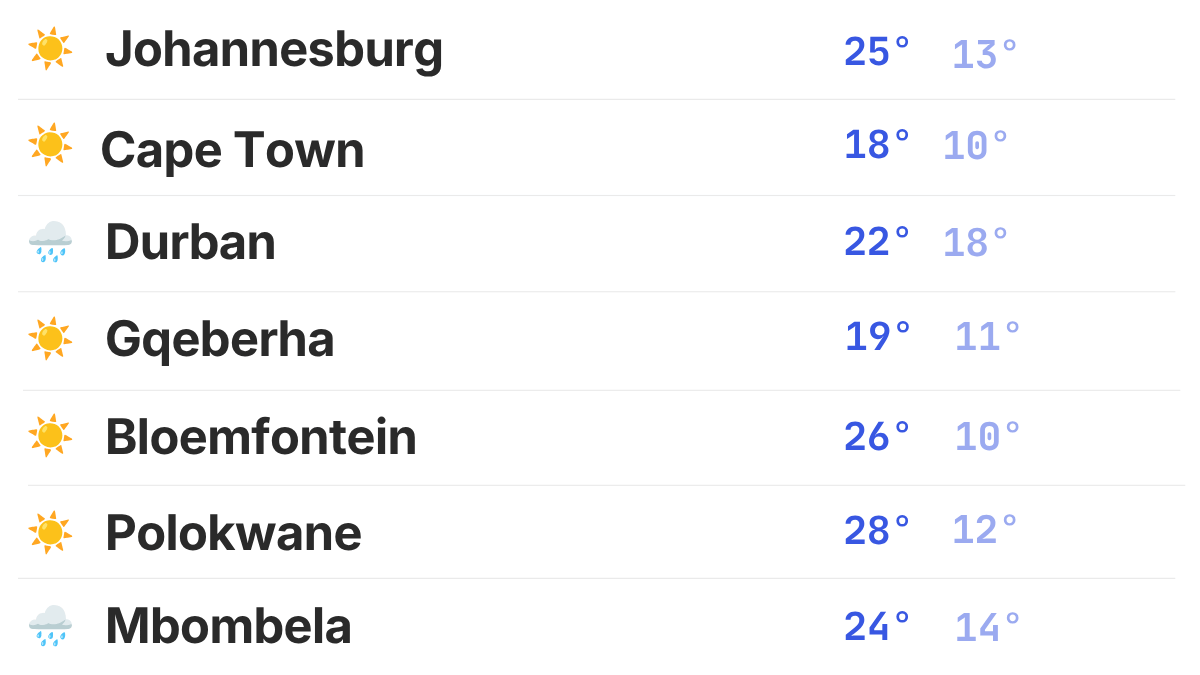
WEATHER
BAGEL GAMES
Have you got what it takes to win today’s Wordle? Play here →
THE ANSWER
As for the Bagel Bite, the answer is: C. The Andes
The Andes stretches about 7,000 kilometres along the western edge of South America through seven countries, from Venezuela to southern Chile and Argentina. Although the Himalayas contain the tallest peaks, the Andes is the longest mountain range on land. But the longest mountain range overall is the global mid ocean ridge system, stretching roughly 65,000 kilometres around the planet. More than 90% of it is underwater, so the Andes takes the title on land.
That's your Wednesday sorted. Enjoyed it? Forward it on, a friend can subscribe in a click. Written by the Business Bagel crew.