

Today’s edition
Trade Off
Presented by
Good morning, it’s Wednesday the 28th of October. Chinese cars are coming back for trade-in, and some South Africans are discovering their vehicles aren’t worth nearly as much as they expected. Also in today’s roundup, a start-up using your neighbours to help you access credit, and Microsoft offering 60,000 employees the chance to leave the company. Let’s get into it.
MARKETS
THE LONG HAUL

Cheap Chinese cars are coming back for trade-in, but the bigger problem is how long the loan runs
One of South Africa’s biggest car dealer groups has a worry about Chinese cars. Combined Motor Holdings, better known as CMH, grew headline earnings 18.6% in its half-year, but its used-car sales fell 10%, because the cheaper Chinese cars sold four or five years ago are coming back as trade-ins worth far less than their owners expected.
There’s some evidence for it: TransUnion had a Chery Tiggo 4 Pro losing 27.1% of its value over three years, against 20.5% for a Kia Sonet. At the same time, though, Cars.co.za found that some Haval and Chery models actually held their value better than several established competitors. So while some Chinese cars depreciate faster, there’s little evidence that this applies to every Chinese brand.
But there’s another part of this story that’s worth understanding: how we finance our vehicles. Most South Africans finance cars over 72-months, but 96-month deals are also on the table. On the latter option, the instalment might be easier to afford, but the car gets harder to sell.
Same car, two loans:
- Six years: a R300,000 car at 12%, with no deposit or balloon, still has about R125,000 owing after four years.
- Eight years: the same car, at the same rate, still has about R185,000 owing at the same point.
- The gap: R60,000 more to settle on exactly the same car, with exactly the same resale value.
So yes, there’s certainly a conversation to be had about the resale value of newer Chinese cars, but that needs to happen on a brand-by-brand basis. What we should really be sounding the alarm on is how longer repayment terms can leave South Africans in a position where they can afford their monthly instalments, but can’t afford to sell their cars.
NEIGHBOURHOOD WATCH

A start-up run by an ex-Capitec employee wants to turn your neighbours into your credit record
We keep finding businesses built around how people in townships actually live: fibre sold a week at a time, Flash's airtime machines in spaza shops, FNB's 99c loaf at Boxer. The latest one is DigiDeeds, a Stellenbosch start-up trying to help people get credit by making their homes visible to banks. By its reading of the figures, only 6.9 million of South Africa’s 17.8 million homes have a title deed.
Its founder, Jaco Carstens, spent 20 years in credit at Capitec, and his fix sounds strange at first: let the neighbours vouch for you. You sign up for free, take a selfie, photograph your ID and pin your home. Seven neighbours then confirm the address and whether you own it, rent it or simply live there, and you get a DigiDeed, a digital record that works as proof of address and, for owners, records the home, though not the land beneath it. DigiDeeds makes its money selling that data to banks and credit bureaus.
It’s a clever idea , but it only pays at scale. DigiDeeds has more than 5,000 members, and needs about 500,000 to break even.
BAGEL BITE
Which of these animals has no brain, heart, or bones?
A. Octopus
B. Seahorse
C. Jellyfish
DOING THE ROUNDS

We’ve mentioned South Africa’s potential credit rating upgrade a few times now, but we’re getting closer. All three major agencies currently rate us two levels below investment grade, with Moody’s and S&P reviewing us on 27 November. Moody’s has already praised last week’s mini-budget, but Fitch, which reviews us on 11 December, sees things differently. While Treasury expects government debt to start falling, Fitch believes it’ll remain around 78% of GDP for another two years before rising to 79% in 2028/29. So, there’s still some disagreement about where we’re heading. Full story →
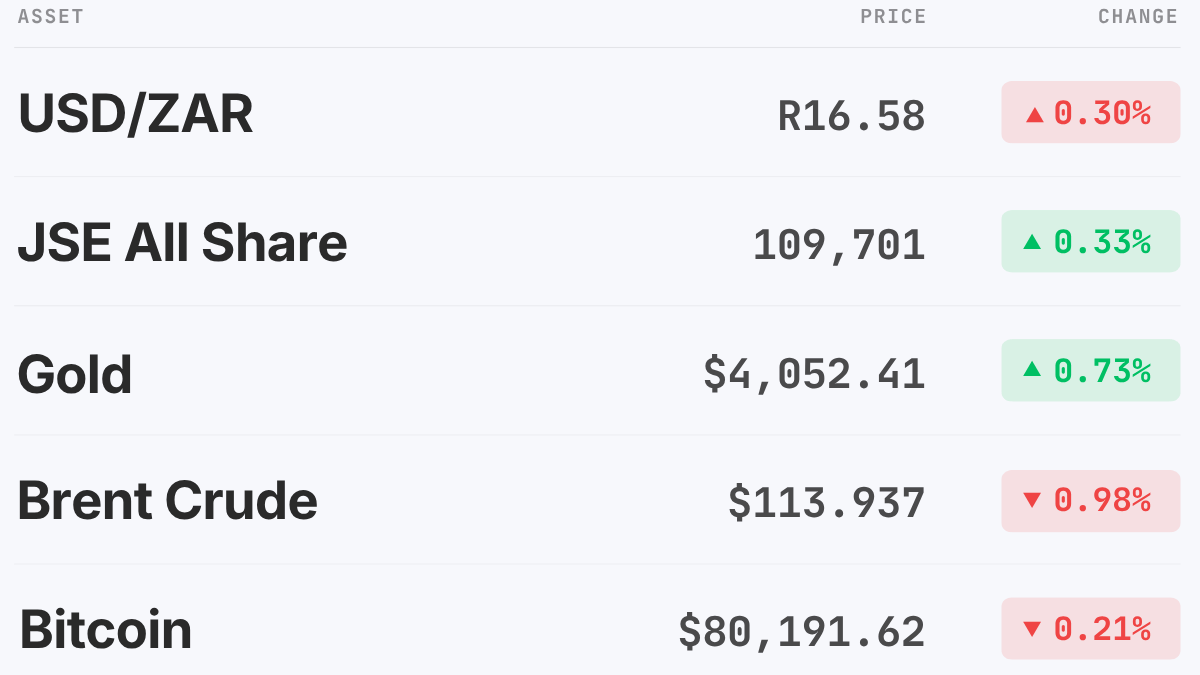
It’s shaping up to be a pretty important week for global markets. Oil prices have eased from a six-month high, although Brent crude is still trading around $115 a barrel. Meanwhile, investors are waiting on earnings from some of the world’s biggest technology companies, including Microsoft, Alphabet and Amazon, after concerns about AI spending weighed on stocks last week. Full story →
Microsoft is offering roughly a quarter of its workforce the opportunity to leave with a severance package. That’s around 60,000 employees across the US, Canada, India and the UK. At the same time, Microsoft expects to spend $175 billion on AI infrastructure this year. Now, importantly, they have stipulated that these are not layoffs. Employees can choose whether to accept, and Microsoft expects relatively few to take the offer. But if this isn’t showing the writing on the wall, I don’t know what is. Full story →
Anthropic has officially filed to list on the Nasdaq stock exchange, and its financial results are pretty wild. In the first six months of 2026, it generated $16.3 billion in revenue, more than all its previous years combined. But it also reported an $80.7 billion loss. Now, before you hit the red button, $72 billion of that was an accounting charge linked to its rising valuation, rather than money actually spent. Its seven co-founders will retain majority voting control, and a share price hasn’t been announced. Full story →
WEATHER
BAGEL GAMES
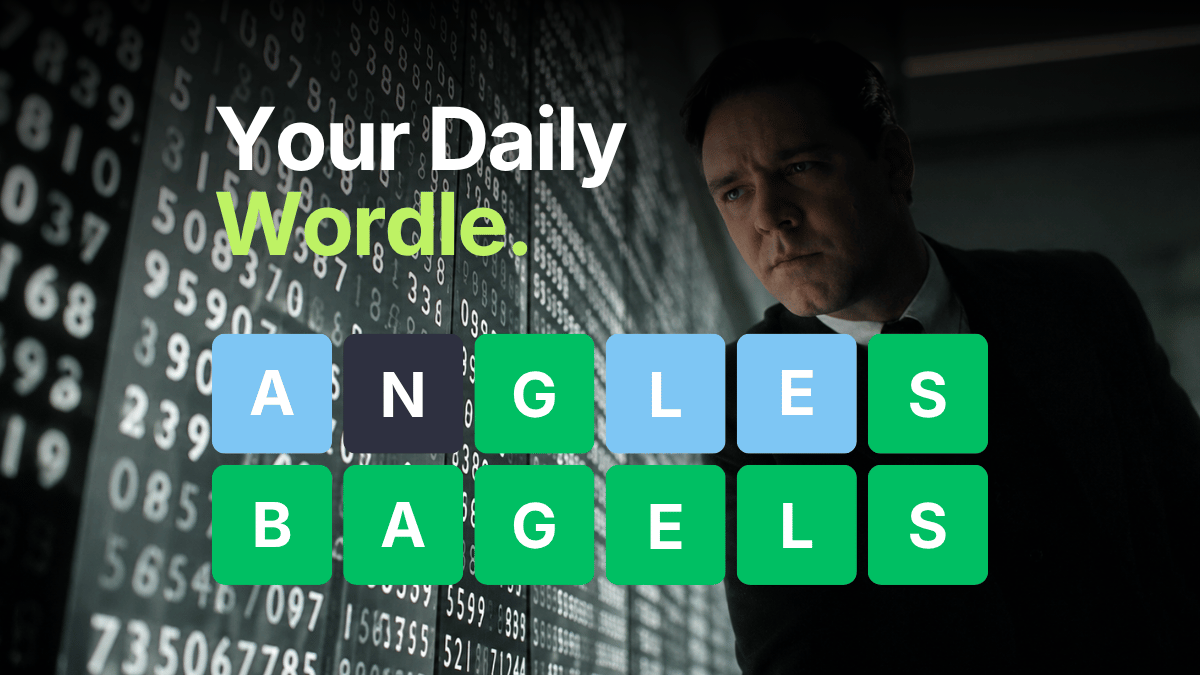
Have you got what it takes to win today’s Wordle? Play here →
THE ANSWER
As for the Bagel Bite, the answer is: C. Jellyfish
Instead of a central brain, a jellyfish uses a network of nerves to detect and respond to its surroundings. Oxygen enters by diffusion through its body wall, without lungs or a heart to circulate blood. Its body is mostly water, with a jellylike layer that helps maintain its shape. Jellyfish have existed for hundreds of millions of years, with fossil evidence dating back more than 500 million years.
That’s your Wednesday wrapped. Enjoyed it? Forward it on, a friend can subscribe in a click. Written by the Business Bagel crew.