
Today’s edition
Crude Awakening
Presented by
Good morning, and welcome to your Monday Roundup. Government has found R10 billion to help South Africans deal with rising fuel prices, but there’s a much bigger problem that money won’t solve. We’ve also got Sanlam’s ambitious move into banking, and Eskom’s Bitcoin mining plans. Let’s get into it.
MARKETS
PRIMING THE PUMP

Government has R10 billion to cushion petrol prices, but most of South Africa's fuel now comes from abroad
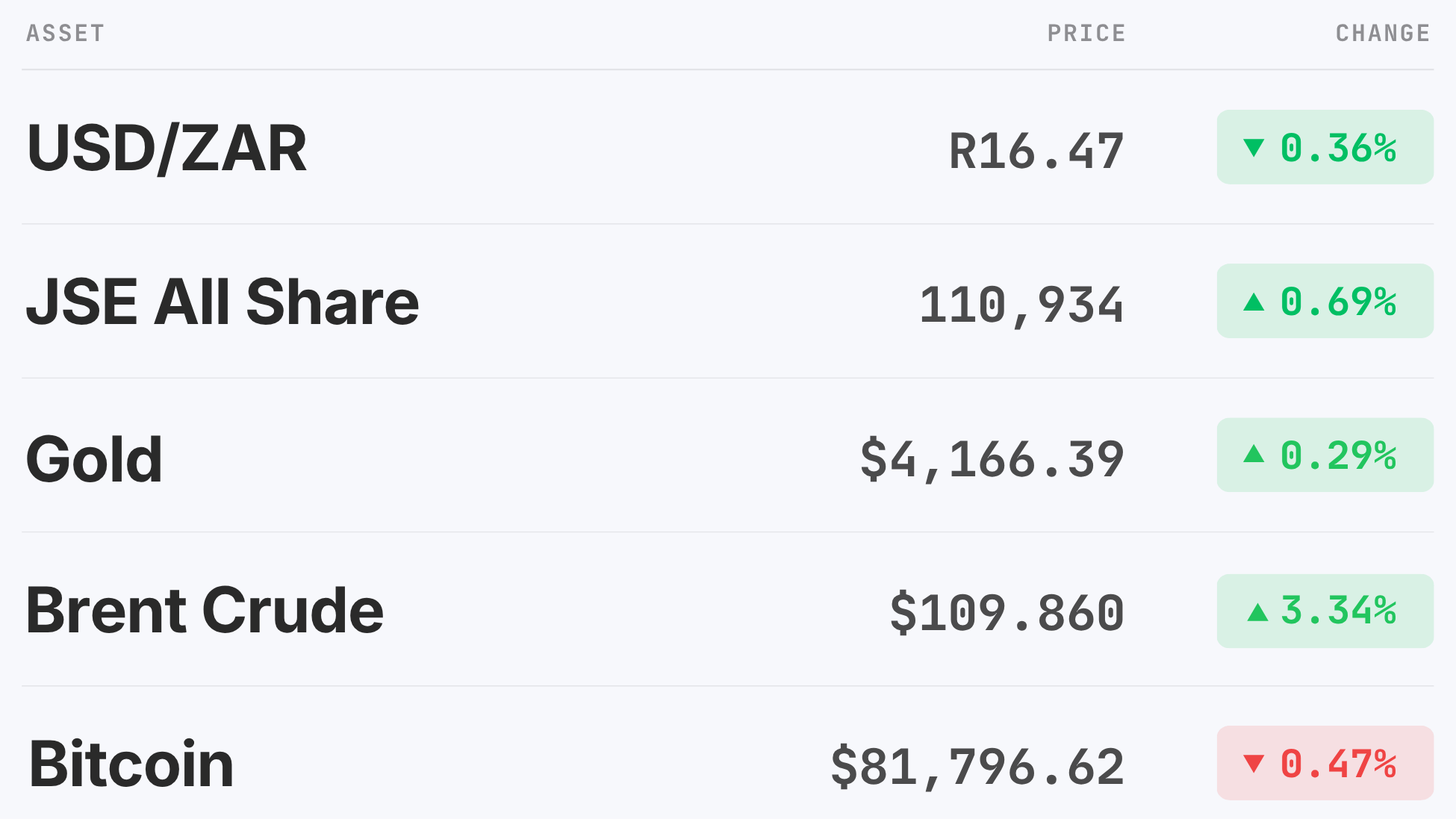
With petrol now costing more than R30 a litre following the war in the Middle East, Treasury wants to use something called the Equalisation Fund to soften future increases. Essentially, government would cover part of the increase so motorists don’t have to pay the full amount at the pump. The plan still needs final approval from Parliament.
The bigger problem is getting far less attention. A refinery turns crude oil into the petrol and diesel you buy, and in 2019 South Africa's own refineries supplied 78% of its fuel. Today it is 39%, and most of the rest arrives already refined from overseas.
Why R10 billion won't fix it:
- Refining at home wouldn't make oil cheaper, because crude still costs world prices. What it would cut is how much finished fuel the country has to buy in.
- That import bill is the big one. An economist estimates South Africans could spend an extra R120 billion on fuel this year (twelve times the relief proposal).
- Reviving Durban's Sapref refinery could more than triple capacity, but it would cost over R100 billion, nobody has agreed who pays, and it would take years.
So the R10 billion softens the blow at the pump, and does little about why South Africa is this exposed in the first place.
BANKING ON A FRIEND
Sanlam wants up to 4 million banking clients, and it is borrowing someone else's bank to get them
South Africa's banking market keeps filling up with challengers that never started out as banks. Insurers Discovery and Old Mutual already have one, retailer Pepkor is building one, and now Sanlam wants 2 million to 4 million banking clients by 2030. The difference is that it isn't building a bank. It's borrowing one: GoTyme, the bank backed by Patrice Motsepe, who also happens to be Sanlam's largest shareholder.
GoTyme supplies the accounts, and Sanlam offers them to its more than 10 million clients through a new app that goes out on trial in November, ahead of a full launch next year. It isn't cheap: R180 million spent so far, R150 million to R200 million a year from here, and no break-even on banking before 2030. The hard part is that most of those clients already bank somewhere else, so Sanlam has to give them a reason to move, whether that's better savings rates, rewards or simpler everyday banking.
Its head start is real, though: millions of customers, an adviser network and a partner that already runs the bank. Turning them into account holders is the 2030 bet.
BAGEL BITE
What pigment gives human skin and hair its colour?
A. Melanin
B. Keratin
C. Collagen
DOING THE ROUNDS

South Africa’s ATMs could soon look very different. The Reserve Bank wants all 30,000 machines to become shared, unbranded ATMs, allowing customers to deposit and withdraw money regardless of who they bank with. The idea is to make cash more accessible and affordable, particularly for poorer households, which spend five times more of their income on cash-related costs than wealthier households. A pilot starts in January, although banks are still negotiating the proposal. Full story →
The Road Accident Fund has just lost a major court battle against Discovery Health. Since 2022, the fund has refused to cover medical expenses for accident victims whose medical aid already paid their bills. A court ordered it to stop back in 2022, but the fund introduced new rules to get around that ruling. Now, the Supreme Court of Appeal has stepped in, condemning its conduct and giving it 14 days to comply. The big winners here are medical aid schemes, which can recover money they previously spent covering those medical bills. Full story →
Apple’s first foldable iPhone is coming to South Africa, and it’s not going to be cheap. The new iPhone Duo starts at R48k, with the most expensive model costing nearly R77k. But what’s interesting is how much more South Africans are paying. Even after converting the US price into rands and adding VAT, the phone costs around 27% more locally. As for Apple’s other new devices, they carry a much smaller premium of around 11%. Full story →
Eskom is looking at new ways to make money as South Africa’s electricity market opens up to more competition. Its CEO, Dan Marokane, told Bloomberg Television that the utility is exploring opportunities to supply electricity to data centres, Bitcoin miners and electric vehicle charging stations, while also increasing exports to neighbouring countries. With more private companies entering the electricity market, Eskom is having to rethink how it operates and where its future revenue will come from. And according to Marokane, that means moving away from trying to do everything itself. Full story →
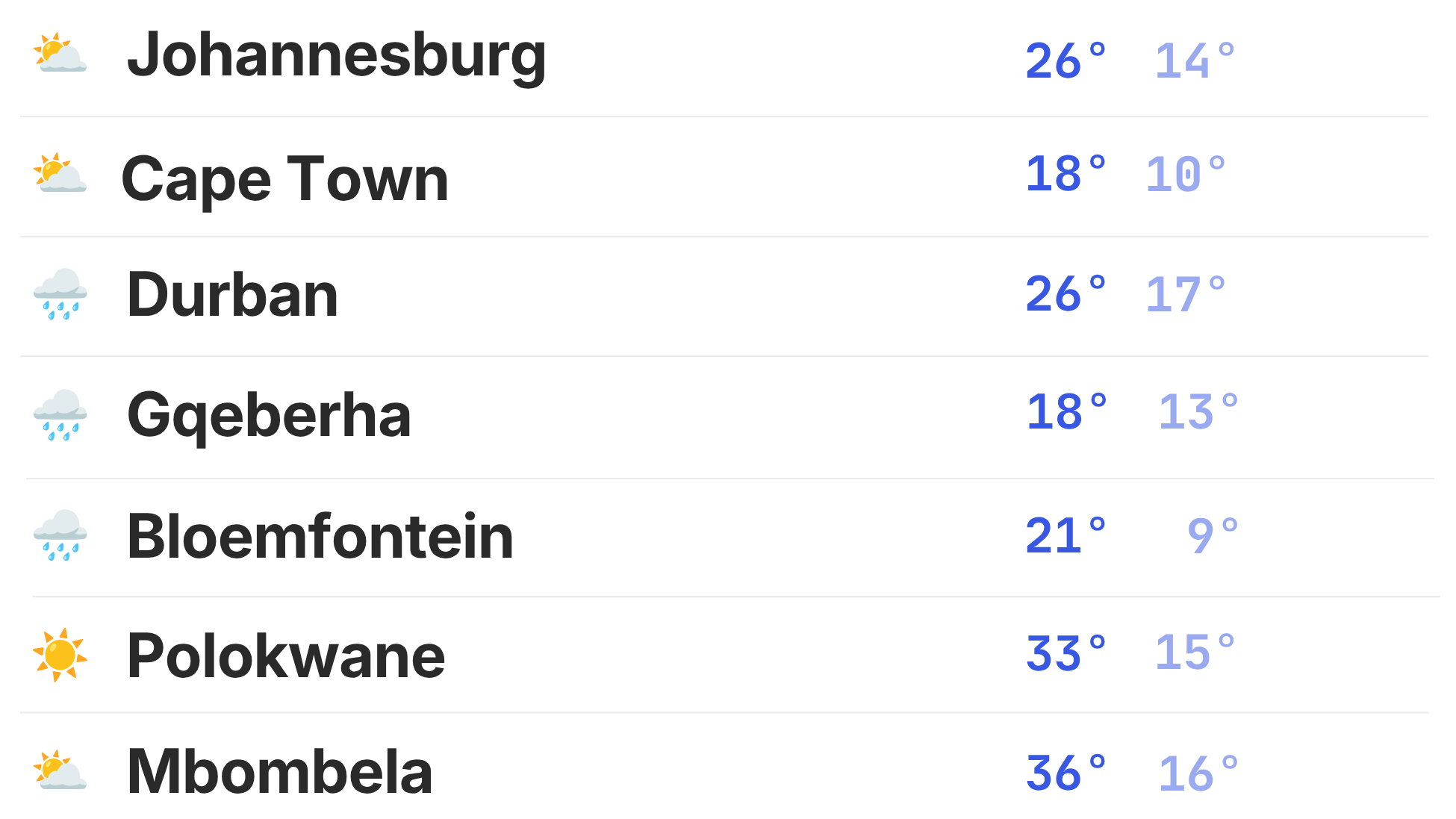
WEATHER
BAGEL GAMES
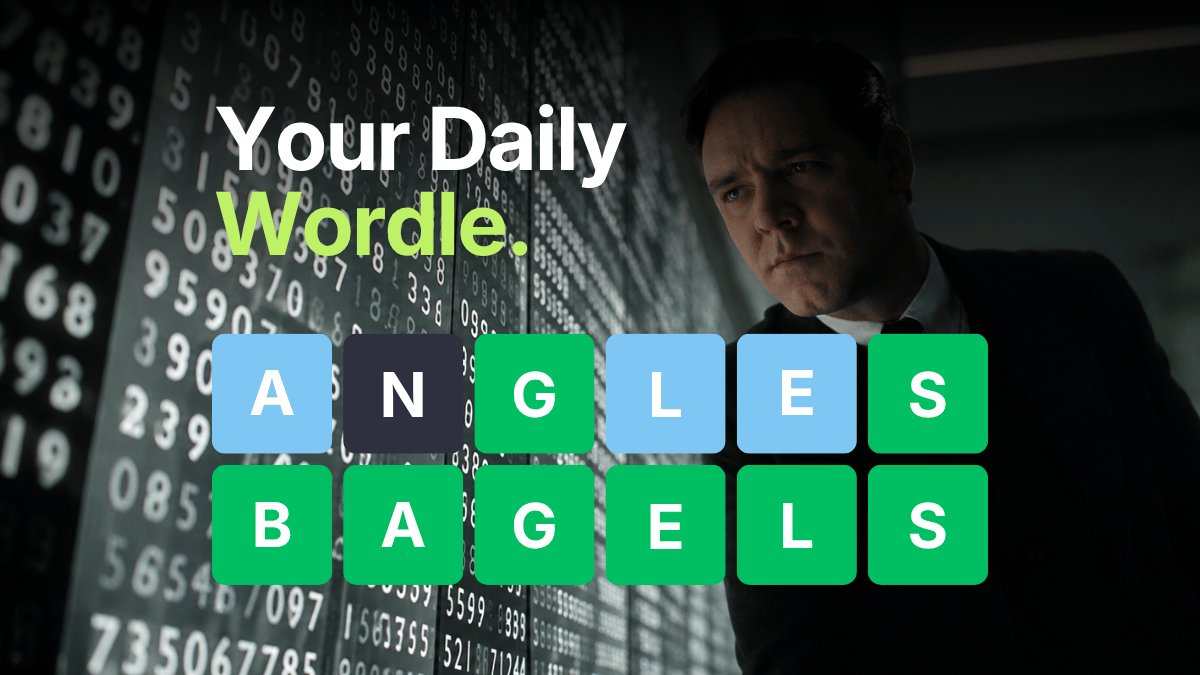
Have you got what it takes to win today’s Wordle? Play here →
THE ANSWER
As for the Bagel Bite, the answer is: A. Melanin
The amount and type of melanin your body produces help determine your skin and hair colour. It is made by specialised cells called melanocytes and absorbs some ultraviolet radiation, providing partial protection from sun damage. Freckles are small areas where the skin produces extra melanin, often in response to sunlight. Keratin is a structural protein in hair and nails, while collagen helps give skin strength and support. Neither is a pigment.
That's your Monday sorted. Enjoyed it? Forward it on, a friend can subscribe in a click. Written by the Business Bagel crew.