Today's edition
Crude Intentions
Good morning. Everyone's chasing something a size too big for them this morning: Johannesburg is openly courting Africa's biggest-ever listing, Pick n Pay is chasing a recovery its own shelves aren't delivering, and Eskom is chasing a green future mostly on other people's money. Ambition is running well ahead of the paperwork today. Let's get into it.
MARKETS
PITCH PERFECT
The JSE Is Fighting to Land a Piece of Africa's Biggest-Ever Listing
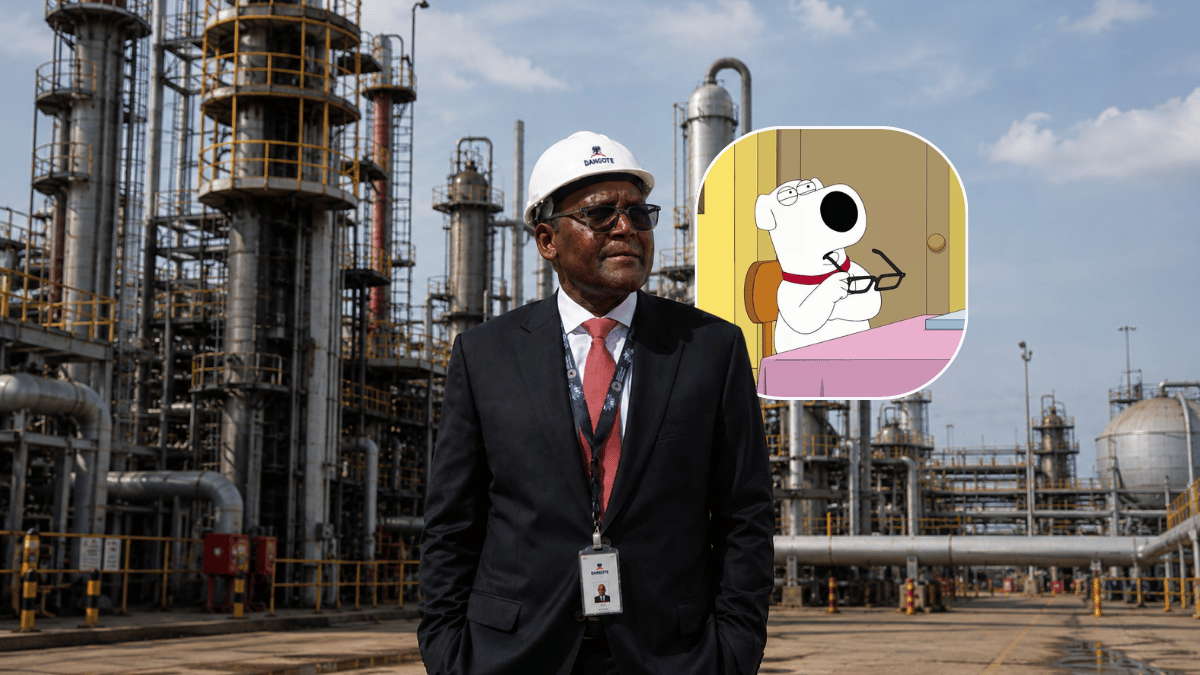
The Johannesburg Stock Exchange doesn't usually campaign in public. This week it made an exception. New chief executive Valdene Reddy told CNBC Africa that Africa's largest stock exchange is bidding to host a secondary listing of Nigeria's Dangote refinery, once the company completes its planned float at home later this year. The prize is enormous: the Dangote listing is put at roughly $5 billion, about R82 billion, and would likely be the largest ever on the continent. Johannesburg's pitch rests on depth, it trades far more each day than Lagos does, but exchanges in Kenya, Egypt, Ghana and Rwanda are all angling for a slice of the same deal.
What's on the table:
- The Dangote refinery, Africa's biggest at 650,000 barrels a day, plans to float in Lagos first, around October, then hopes to add a Johannesburg listing shortly thereafter.
- The JSE's edge is liquidity: it trades between $1.5 billion and $2 billion a day, against roughly $10 million to $20 million on Nigeria's own exchange.
- The catch: even a win would likely be depositary receipts that merely track the shares, not the shares themselves, and analysts value the refinery anywhere from $40 billion to $50 billion.
For an exchange that has watched its roster of listings thin out for two decades, landing even a piece of Dangote would be a statement of relevance. But strong intent is not ink on a page, and whether the public courtship turns into an actual listing, and in what form, is the thing to watch.
MIXED BASKET
Pick n Pay's Recovery Is Real, Just Not in Its Own Supermarkets
Pick n Pay's turnaround is finally showing up in the numbers, just not where you'd expect. In a trading update for the 20 weeks to 19 July, group turnover grew 2.7%, online sales jumped 37.5%, and the long-suffering clothing division clawed back to nearly flat. The catch is where that growth sits: the Pick n Pay-branded supermarkets that give the group its name were essentially flat. Almost all the momentum came from Boxer, the discount chain it spun off in 2024, and from online orders through Pick n Pay asap! and the Mr D app.
Management was blunt that much remains to be done, and the hardest part isn't on the shop floor: breaking even by the 2029 financial year hinges on a mass-retrenchment process now before the Labour Court, with up to 22,000 jobs in play. Until that resolves, the turnaround stays a story only half told.
BAGEL BITE
What is the largest fish species in the ocean?
A. Basking shark
B. Whale shark
C. Great white shark
DOING THE ROUNDS
Sasol's profit is about to leap, but not the number that counts most. A fresh trading statement guides earnings per share to between R17.50 and R19.50 for the year to June, up as much as 84% on a year earlier. Look one line down, though, and the cleaned-up figure investors actually track is guided to rise just 2% to 14%. A friendlier oil price and last year's writedowns not repeating, rather than a real turnaround, did most of the lifting. The proper test comes with full results on 1 September. Full story →
EasyEquities is about to move into Absa's banking app. From September, the investing platform will sit directly inside Absa's app, handing the bank's roughly 12 million retail customers a simple route into the market. It's a familiar play: EasyEquities already powers investing inside Capitec and Discovery Bank, and the two businesses already overlap, with about 125,000 of its clients funding through Absa. The bank gets share trading without the cost of building a broker of its own. Full story →
Emirates and SAA just turned a 30-year partnership into a two-way street. With regulators signed off, Emirates can for the first time sell seats on South African Airways flights, across nine domestic and regional routes. Until now the deal ran one way, with SAA's code on Emirates flights. The real prize is Johannesburg's role as a hub, funnelling international connecting traffic, especially from Europe, through the city and out across the continent. Full story →
South Africa's property funds just broke free of the interest-rate trap. Listed property returned 1.4% in July, edging out both shares and bonds, and for once it wasn't about rate cuts. Rolling 12-month dividend growth held at 10.58%, a fifth straight quarter ahead of inflation, so rising rents are now doing the work that falling rates used to. With the Reserve Bank holding the repo rate at 7%, that's a sector no longer hostage to the next rate call. Full story →
Eskom wants to go green, mostly with other people's money. Its year-old renewables arm, Eskom Green, will tender a 2GW solar and 1GW battery-storage project within the next month, and plans to keep the cost off Eskom's strained balance sheet by funding through separate project companies alongside private partners. The ambition is big: 5.6GW of renewables by 2030, rising to 32GW by 2040, with most of that build left to the private sector. Full story →
WEATHER
BAGEL GAMES
Have you got what it takes to win today’s Wordle? Play here →
THE ANSWER
As for the Bagel Bite, the answer is: B. Whale shark
The whale shark, scientifically known as Rhincodon typus, is the world’s largest fish, reaching around 12 metres and weighing more than 20,000 kilograms. Despite its enormous size, it is a gentle filter feeder that eats plankton, fish eggs and small marine animals. It is classified as a fish because it breathes through gills, is cold blooded and has a skeleton made from cartilage.
That's your Friday sorted. Enjoyed it? Forward it on — a friend can subscribe in a click. Written by the Business Bagel crew.