Today's edition
Copper Bottomed
Good morning. Today is about what a business chooses to keep, and what it's willing to let go. Anglo American is selling off the diamonds and coal that built it to bet everything on copper; BMW is shedding thousands of jobs to defend its margins; and a war an ocean away is quietly emptying South Africa's planes. Different companies, one question: what's worth holding onto? Let's get into it.
MARKETS
DIAMONDS AREN'T FOREVER
Anglo American more than tripled its dividend on record copper prices, even as it slipped to a loss
Anglo American is in the middle of the biggest overhaul in its long history, and its half-year results show both the promise and the price. Record copper prices lifted underlying profit 35% to $4 billion and let the board more than triple its interim dividend to $0.23 a share. Yet the company still lost money: a $0.9 billion bottom-line loss, because writing down the coal business it is selling to Dhilmar for up to $3.9 billion is the cost of becoming a copper company. Copper alone threw off $2.9 billion at a 60% margin, effectively carrying the group while De Beers and coal head for the exit.
The reinvention, in brief:
- Copper is the whole bet now: $2.9 billion in earnings at a 60% margin, effectively carrying the group.
- The old guard is going: steelmaking coal to Dhilmar for up to $3.9 billion, plus talks to sell 85% of loss-making De Beers for about $1 billion.
- The prize: a merger with Canada's Teck, waiting only on antitrust approval from China, targeted to complete by March 2027.
The catch is concentration: with copper throwing off almost all of Anglo's earnings, the whole plan rides on the metal holding its record run and the Teck deal clearing China.
RUNNING ON EMPTY
FlySafair says a war a continent away has knocked 14% off its passenger numbers
FlySafair usually flies between 850,000 and 900,000 passengers a month. Right now it is closer to 750,000. The low-cost airline told a media roundtable this week that domestic demand has dropped about 14% since the US-Iran war began in February, and the culprit is not nervous flyers but the fuel bill. Jet fuel makes up 50% to 55% of an airline's costs, and the price FlySafair pays jumped from R11.40 a litre to more than R30 at its peak before easing to about R18. A clearly labelled, temporary surcharge has quietly priced ordinary travellers out.
BAGEL BITE
Which famous tree is the tallest known living tree in the world?
A. Hyperion
B. Centurion
C. General Sherman
DOING THE ROUNDS
Your favourite chicken spot might be about to get some official attention. The Competition Commission has published draft terms for a sweeping inquiry into South Africa's roughly R1-trillion franchise sector, the machine behind KFC, Chicken Licken, Pick n Pay, Spar, Spur and Sorbet. It wants to know whether steep upfront costs, tight supplier rules and “skewed, racialised” ownership are locking small players out. Public comment closes on 7 August, and the probe could run for up to 18 months. Full story →
Woolworths' turnaround keeps running into the same wall. The upmarket grocer and clothing retailer grew full-year sales 4.3%, but second-half growth slowed to 3.3% as the Middle East war pushed up fuel and inflation and fresh rate hikes made shoppers pickier. Its Australian arm, Country Road, crept back into profit, though less than hoped. New chief executive Sam Ngumeni, in the job since June, expects core earnings up between 2.5% and 7.5% when full results land on 2 September. Full story →
Germany's carmakers keep reaching for the same lever. BMW has agreed with its workers to cut several thousand jobs by the end of 2027, with insiders putting the number near 8,000, mostly in office and development roles rather than the factory floor. The trigger is a rough patch: quarterly profit fell 35% as Chinese sales slumped and US and EU tariffs bit. Volkswagen, Mercedes and Porsche are all trimming too. Full story →
Microsoft is turning artificial intelligence into serious cash. The software giant pulled in $90 billion of revenue and $35.8 billion of profit in the three months to June, as its cloud arm jumped 27% and Azure passed $100 billion in annual sales for the first time. It even booked a $3.2 billion paper gain on its stake in AI lab Anthropic. Not everything shone: Xbox sales fell another 10% and Windows slipped, so boss Satya Nadella is promising an Xbox reset by 2027. Full story →
WEATHER
BAGEL GAMES
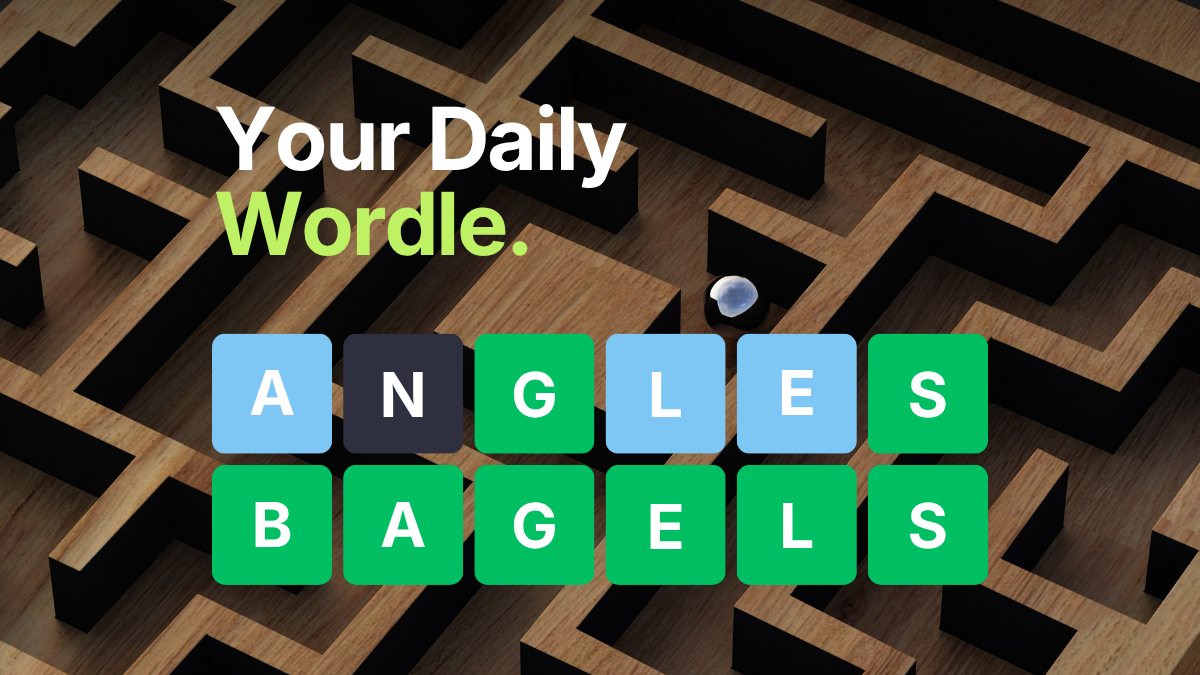
Have you got what it takes to win today’s Wordle? Play here →
THE ANSWER
As for the Bagel Bite, the answer is: A. Hyperion
Hyperion is a coast redwood, scientifically known as Sequoia sempervirens, growing in Redwood National Park in California, United States. Naturalists Chris Atkins and Michael Taylor discovered it on 25 August 2006. A 2026 field update reported that the tree had reached approximately 116.22 metres, or 381.3 feet, making it the tallest known living tree in the world. Hyperion is estimated to be between 600 and 800 years old. For comparison, London’s Elizabeth Tower, which houses the bell known as Big Ben, stands 96 metres tall, meaning Hyperion rises just over 20 metres higher. Its surrounding area is closed to visitors because heavy foot traffic damaged the fragile forest floor around the tree.
That's your Friday wrap. Enjoyed it? Forward it on — a friend can subscribe in a click. Written by the Business Bagel crew.