

Today’s edition
Levy Breaks
Presented by
Good morning. It’s Friday, the 23rd of October, and a lot has been said about South Africa’s mini-budget speech this week. So this morning, we're going to break down what you actually need to know, from relief at the petrol pumps to some surprisingly good news about government debt. Not to mention a couple of other cool stories too. Let’s get into it.
MARKETS
DOOR NUMBER TWO
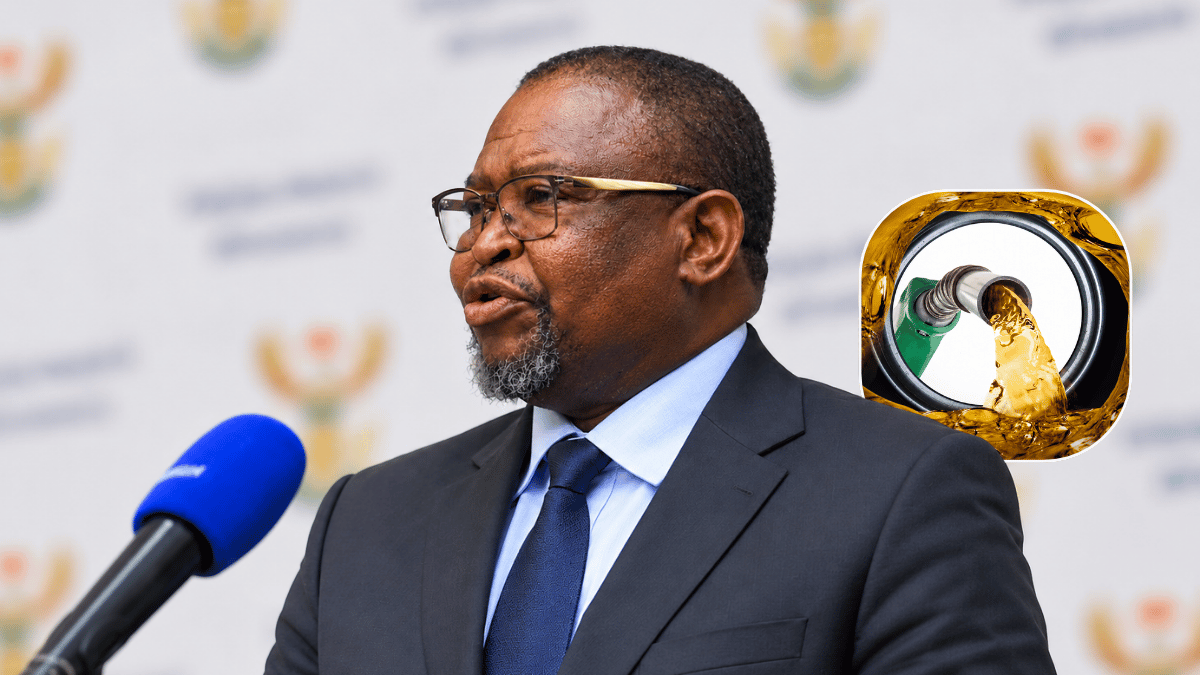
Government had three ways to pay for fuel relief, and it took R10 billion back from the Central Energy Fund
Earlier this year there were really only three ways to deal with rising fuel prices: motorists swallow the increases, government cuts spending somewhere else, or it borrows more. In Wednesday’s mini-budget, Finance Minister Enoch Godongwana went with door number two. The R10 billion in relief comes from money that had already been sent to the Central Energy Fund, which helps government manage pressures in the energy sector. Treasury is taking it back and using it to cut the fuel levy, the tax built into every litre of petrol or diesel you buy.
What changes at the pump:
- From 4 November to 1 December, the levy drops by R3 a litre on diesel and R1.50 on petrol.
- After that, a smaller cut of R1.50 on diesel and R1 on petrol runs until 5 January.
- Fuel hit a record in October and is expected to rise again in November, so the cut may soften an increase rather than lower the price.
The Central Energy Fund now has R10 billion less for the job it was first given, which may simply push that problem further down the road.
ANCHOR MANAGEMENT
Government debt has stopped outrunning the economy, but there is still no number to hold Treasury to
The other big takeaway is that government’s finances are finally looking healthier. For the first time in almost 20 years, government debt has stopped growing faster than the economy, stabilising at 78.4% of GDP, almost 80% of everything South Africa produces in a year. Treasury expects that share to start falling. The problem is that we’re still spending around R1.2 billion every day just on interest, before paying back anything we borrowed, and with the growth forecast cut from 1.6% to 1.2%, growing our way out of that debt is going to be harder than expected.
All Weather Capital’s Nick van Rensburg sees encouraging changes in government spending, particularly the shift towards infrastructure, which could stimulate growth. But his colleague, fixed income trader Batheeng Mashoeshoe, says one important thing is still missing: a clear fiscal anchor, a limit government sets for itself, like keeping debt below a certain share of GDP. Treasury has promised more discipline, but hasn’t committed to a number.
That could matter soon. On 27 November, Moody’s and S&P review South Africa’s credit rating. Mashoeshoe believes they should welcome the progress on debt, but before he’d be confident about an upgrade, he wants a firm fiscal anchor, windfalls used to reduce debt, and faster growth.
BAGEL BITE
Which country has three capital cities?
A. Nigeria
B. Kenya
C. South Africa
DOING THE ROUNDS
South Africa wants to bring a massive part of the global investment industry back home. Until now, local investment firms wanting to manage international money have often had to set up operations overseas. But new rules proposed by the Reserve Bank and Treasury would allow approved firms to manage entirely foreign investments, in foreign currencies, right here in South Africa. The JSE estimates that up to R10 trillion in offshore assets could potentially be managed from here. That’s not guaranteed, but it could be a huge opportunity for our financial industry. Full story →
One of South Africa’s biggest private education groups has bought a 25% stake in an AI company whose technology its pupils have been using since 2023. Advtech, which owns schools like Crawford International, has invested R15.8 million in a local company called MathU. Its technology helps pupils learn maths and physical science, with English coming soon. The investment gives Advtech a seat on MathU’s board and exclusive rights to its current and future AI education tools, meaning it now has a stake in the technology being developed for its classrooms. Full story →
Chinese carmaker Chery has confirmed that its new Omoda C4 will be manufactured right here in South Africa. Earlier this year, Chery bought Nissan’s former factory in Rosslyn, Pretoria, as part of its plans to start producing cars locally. The Omoda C4 will come in petrol, hybrid and fully electric versions, with production expected to begin around mid-2027. Chery plans to produce 15,000 vehicles in the second half of next year, although it hasn’t yet revealed how much it’s investing in the factory or how many jobs it will create. Full story →
DStv’s new owner has reported a massive jump in revenue, although its South African business is still struggling. French media giant CANAL+ grew revenue by 37.5% over the first nine months of the year, largely because it acquired MultiChoice, the company behind DStv. But MultiChoice’s own revenue fell 3% on a like-for-like basis, largely because of weaker subscription revenue in South Africa. To reverse that decline, CANAL+ introduced a simpler DStv offering in September, giving customers more content and choice for the same price. Full story →
WEATHER
BAGEL GAMES
Have you got what it takes to win today’s Wordle? Play here →
THE ANSWER
As for the Bagel Bite, the answer is: C. South Africa
Pretoria is the administrative and executive capital, Cape Town is the legislative capital where Parliament sits, and Bloemfontein is traditionally known as the judicial capital and houses the Supreme Court of Appeal. This division dates back to a political compromise when the Union of South Africa was formed in 1910. However, the Constitutional Court, now the country’s highest court, is in Johannesburg. Calling Bloemfontein the judicial capital does not mean that all major courts are based there.
That’s your Friday wrapped. Enjoyed it? Forward it on, a friend can subscribe in a click. Written by the Business Bagel crew.