
Today's edition
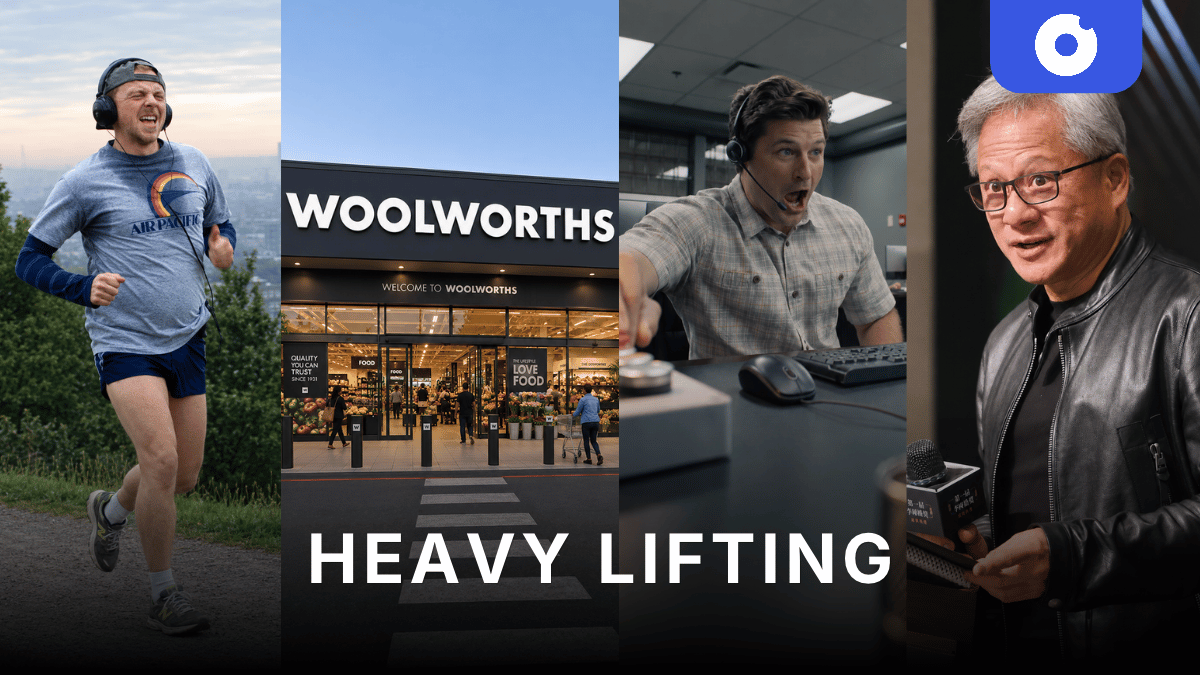
Heavy Lifting
Presented by
Good morning. Virgin Active has fewer members than a year ago, but it’s making more money. So how does that work, and what does it mean for Brait, which is preparing to sell or list the business? We’ve also got the two big levers facing South Africa, a flood of new shares on Wall Street, a rough day for Woolworths, and the fight over Nvidia’s CEO.
Plenty to get through before the weekend.
Let’s get into it.
MARKETS
NO PAIN, NO GAIN
Virgin Active is losing South African members but making more money, and that’s exactly what Brait wants

Virgin Active is losing members in South Africa, but it’s actually making more money. On Wednesday, Brait, whose biggest investment is Virgin Active, reported that the gym chain’s South African membership had fallen about 4% over the past year, to 605,000. Yet revenue grew 5%. So how does that work?
Over the past year, Virgin Active has been investing heavily in turning its clubs from traditional gyms into what it calls social wellness destinations, with upgraded facilities like saunas and ice baths. Rather than competing purely on the number of members it can attract, it wants to earn more from each member by offering something they’re prepared to pay more for.
The premium trade-off
- Higher prices are largely driving revenue growth, with monthly fees from R540 to R1,670, and South African earnings still grew 2% despite losing members.
- But charging more means members expect more: complaints about broken treadmills and overstretched staff, and in October the rewards programme lost its guaranteed weekly rewards and tiers.
- Brait is preparing to sell Virgin Active or list it, potentially within the next two years, after putting R2.4 billion into a capital raise to cut its debt.
But if Virgin Active wants to keep charging premium prices, it’ll need to convince enough South Africans that this wellness experience is worth paying for.
PULLING BOTH LEVERS
The two big levers that could decide South Africa’s next move
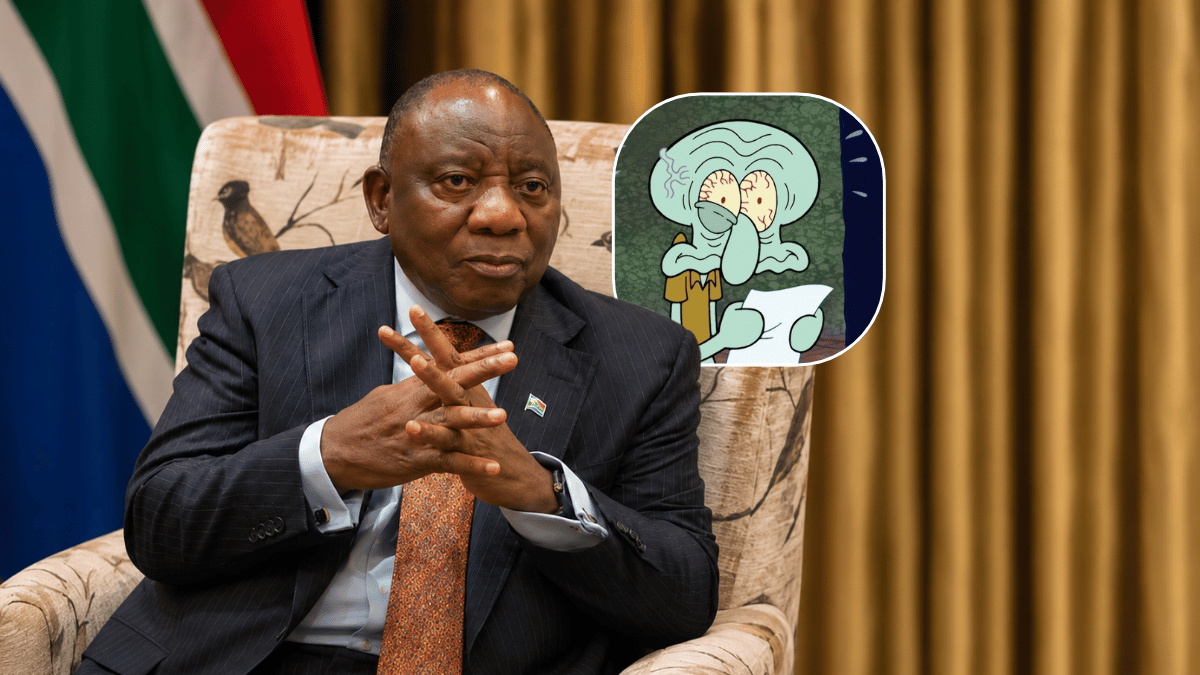
There are two things that could have a massive impact on South Africa’s economy over the coming months. Imagine them as two levers.
The first is our government of national unity: following this month’s municipal elections, there’s a question over whether it holds together. Since the GNU was formed, All Weather Capital says foreign investors have bought around R220 billion of our government bonds, which helps bring down our borrowing costs. But pull this lever towards the GNU collapsing, and All Weather expects the rand to weaken significantly and government borrowing costs to shoot up as foreign investors pull out.
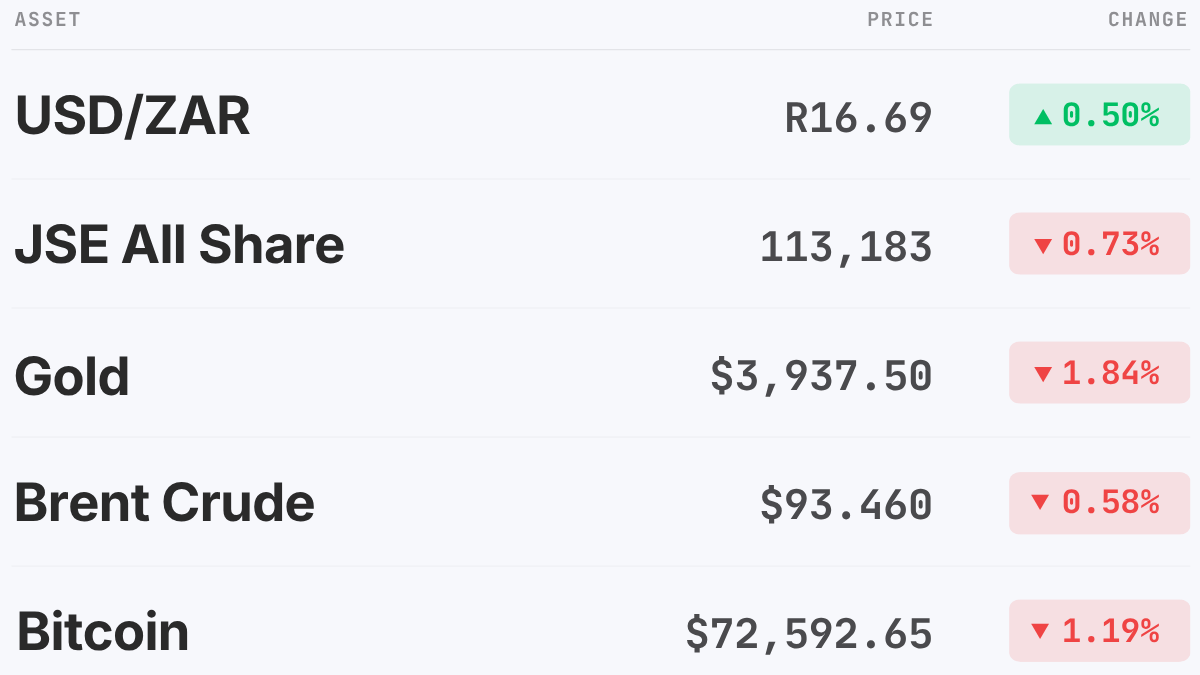
The second lever is the war in Iran. Since February, South African petrol prices have risen more than 48%, while diesel is up over 66%. Brent crude is currently around $93 a barrel. Pull this lever towards peace, and All Weather believes oil could fall into the $70s, potentially bringing some much-needed relief at the pumps. But pull it towards escalation, and they see oil potentially climbing back to between $110 and $135 a barrel. For a country that imports most of its oil, that’s an enormous difference.
Both levers moving the wrong way means a weaker rand and dearer oil. Both moving the other way could bring a stronger rand, cheaper fuel and lower borrowing costs.
BAGEL BITE
Which of these is botanically a fruit?
A. Cucumber
B. Lettuce
C. Carrot
DOING THE ROUNDS
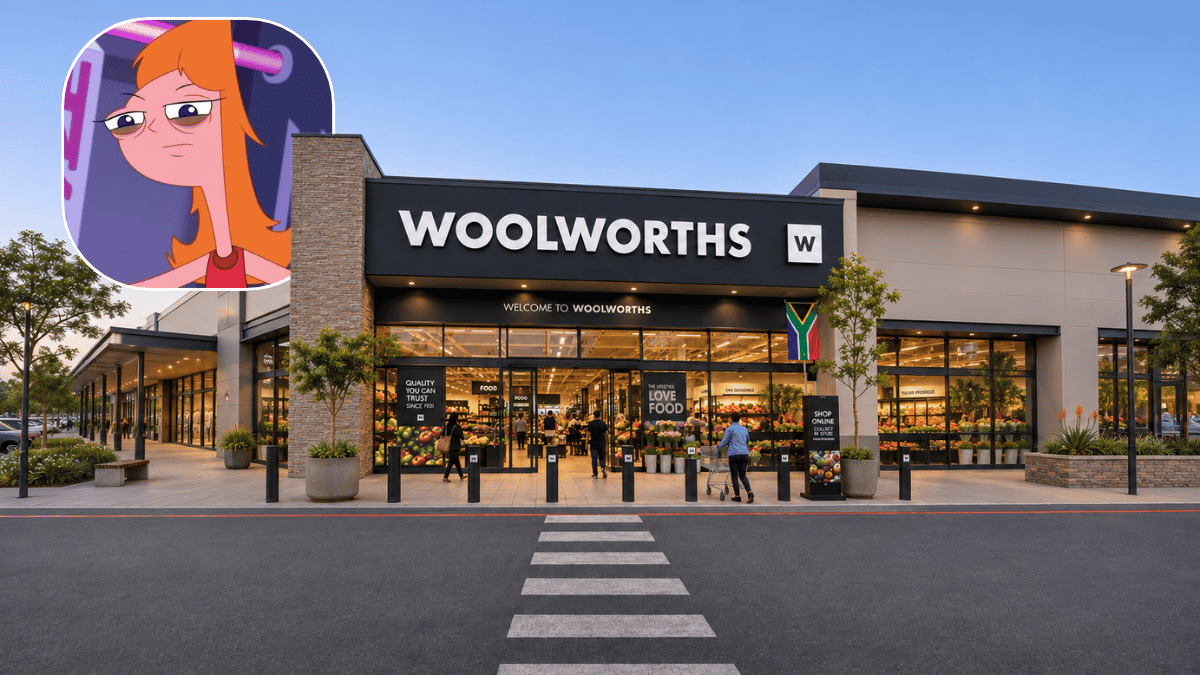
Woolworths shares fell 8.5% on Wednesday after a disappointing trading update revealed that even its food business is under pressure. Over the past 19 weeks, food sales grew just 1.9%, despite prices increasing by 3%, suggesting shoppers are buying less. Things aren’t looking much better in Australia, where its clothing business, Country Road Group, reported a 9.5% decline in sales. To make matters worse, several of its brands sell through David Jones, which has now gone into administration. Full story →
All Weather Capital has highlighted a shift in supply and demand in the US stock market. Last year, American companies bought back almost $1 trillion of their own shares, supporting demand and prices. But this quarter, a wave of new shares is entering the market, including Meta’s $97.5 billion equity raise and Anthropic’s upcoming IPO, which could raise $64 billion. According to All Weather, that’s roughly $285 billion in new share supply already, which investors will need to absorb. Full story →
South African pharmaceutical giant Aspen has received approval to sell a cheaper version of Ozempic in South Africa and Brazil. It contains semaglutide, the active ingredient in Ozempic and Wegovy, and is approved for type 2 diabetes, although doctors can prescribe it for weight loss. Aspen hasn’t announced a price, but says it’ll be cheaper than the original brands. Interestingly, Aspen already distributes Eli Lilly’s Mounjaro, which holds 53% of South Africa’s market. So it now has a foot in both camps of the weight-loss drug market. Full story →
WEATHER
BAGEL GAMES
Have you got what it takes to win today’s Wordle? Play here →
THE ANSWER
As for the Bagel Bite, the answer is: A. Cucumber
Botanically, fruits develop from a flower’s ovary and usually contain seeds. A cucumber fits this definition, even though we commonly treat it as a vegetable in cooking. Some cucumber varieties are seedless, but they are still fruits.
That’s your Friday wrap, and your week. Enjoyed it? Forward it on — a friend can subscribe in a click. Written by the Business Bagel crew.
Views quoted from All Weather Capital are their own and not financial advice. All Weather Capital is an Authorised Financial Services Provider (FSP 36722). Full disclosures are available at allweather.co.za.