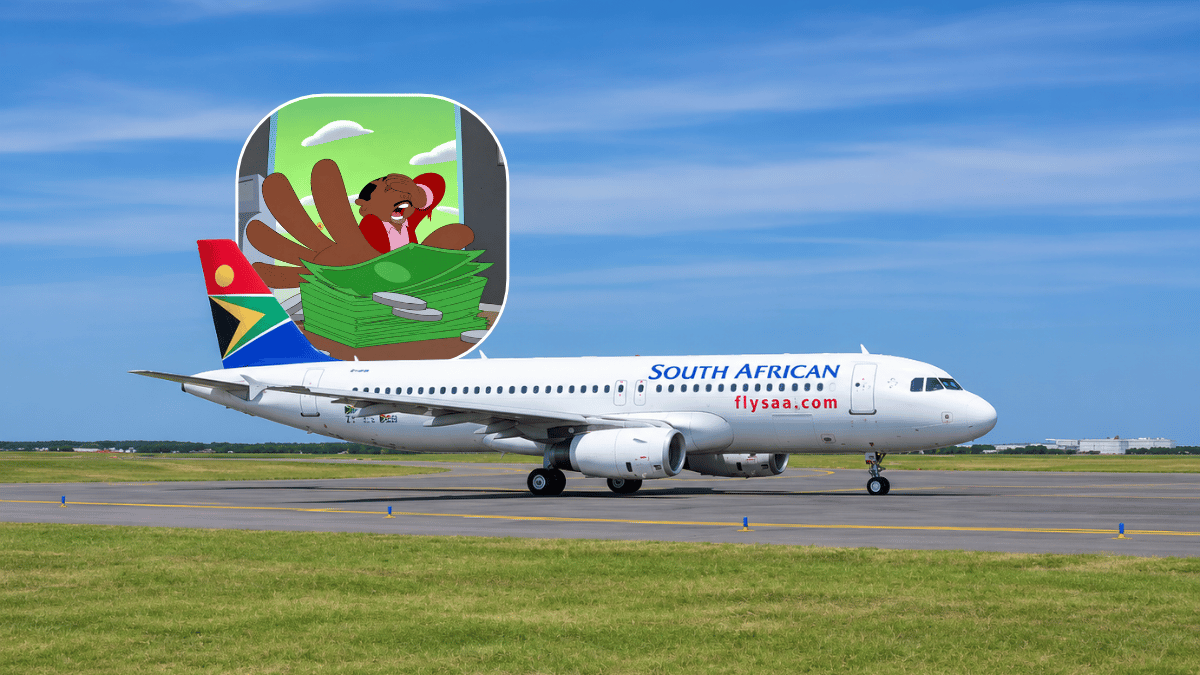
South Africa's busiest travel season is almost here, but South African Airways has much bigger problems. Our national airline is heading into December with its third chief executive this year, a R1 billion government guarantee and a February deadline to find a private investor. Which is strange, because weren't we just hearing about SAA's remarkable recovery? To understand what's actually going on, we need to go back a few years.
How SAA ran out of money
By 2019, SAA hadn't made a profit since 2011. Years of financial mismanagement had left it in serious trouble, and allegations against former chairperson Dudu Myeni were widely blamed for much of the damage. In May 2020, the Pretoria High Court declared her a delinquent director, banning her for life from serving as a company director. But by then, SAA had already run out of money: in December 2019, it entered business rescue.
In September 2020, it stopped flying altogether. That year it handed more than 30 aircraft back to the companies it leased them from, and in October it received another R10.5 billion government bailout to fund its turnaround. It finally came out of business rescue in April 2021.
Then things started looking up. SAA relaunched in September 2021 with just six planes flying five routes, and by October 2025 it had grown to 18 planes on 17 routes. The plan was to bring in a private partner, with the Takatso Consortium agreeing to buy 51% of the airline. But after almost three years of negotiations, the deal collapsed in 2024 when government raised its valuation of SAA, which Takatso said changed the economics it had signed up to.
A profit built on Heathrow slots
Dig into the numbers behind that recovery, though, and things start looking a little strange. In February 2026, SAA announced a R155 million profit for the year to March 2025. Sounds promising, right? Except that included a once-off gain of about R1.1 billion from selling one of its two valuable pairs of landing slots at London's Heathrow Airport. Without that sale, SAA was still making an operating loss: on EBITDA, a common measure of what the core business earns, it lost R317 million.
The Auditor-General couldn't give an opinion on SAA's financial statements at all, because it couldn't get enough audit evidence to support one. Briefing Parliament in April, the Auditor-General's office said the reported profit came from selling assets such as the Heathrow slots. It also warned that SAA is a going concern with material uncertainties, which it said means the airline may close within the next 12 months.
Then came the leadership crisis. In April, CEO John Lamola resigned, along with three board members SAA didn't name, shortly after the acting finance chief took early retirement. Lamola told Daily Maverick he was leaving for personal reasons. His acting replacement, Matshela Seshibe, lasted about four months before being placed on special leave in August, and chief legal officer Koekie Mbeki has been acting CEO since. Seshibe was later dismissed from SAA's subsidiary Air Chefs after being found guilty on four of six disciplinary charges, which concerned pay approvals and a perceived conflict of interest.
The money is tight too. A fuel price shock this year forced SAA to raise fares and cut flights, and in September and October it staggered salary payments for pilots, specialists and management. In August, government approved the R1 billion guarantee for working capital, which SAA hasn't yet drawn on. One of its conditions is the February deadline, and Treasury says that when the guarantee runs out, there will be no more state support. That's after around R50 billion in bailouts over the years, by Treasury's count.
So at this point, we're not talking about one canary in the coal mine. There's practically a flock of them. And with February fast approaching, the question is whether SAA can find a private investor before things get even worse.