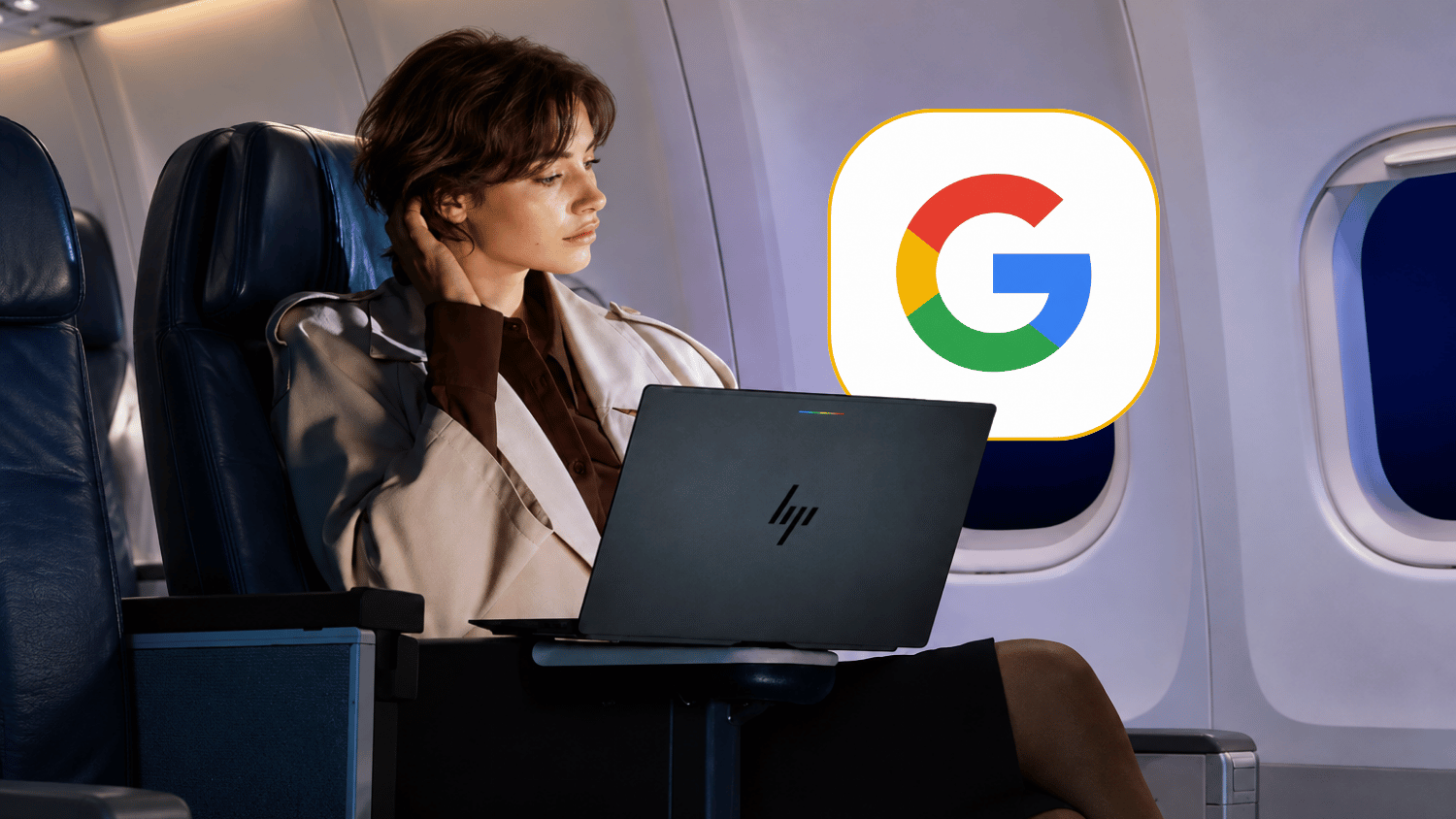
Google opened pre-orders on Monday for the first five Googlebooks, laptops built on the Android technology stack with desktop foundations from ChromeOS and Gemini wired through them. Acer, ASUS, Dell, HP and Lenovo are making them, not Google. Prices start at $899, and exactly one machine is that price.
The pitch is continuity. Most people start a task on a phone and finish it on a laptop, and Google's own framing is that a laptop should not treat an Android phone like a stranger. Sign into a Googlebook and the phone's settings, saved passwords, Wi-Fi networks and messages come across with it, end-to-end encrypted. Continue On picks up whatever was open on the phone; Cast My Apps streams a phone app into a window on the desktop.
What Gemini actually does on it
Gemini is the reason the machine exists, and it arrives on request rather than sitting there watching. Wiggle the cursor and Magic Pointer brings Gemini onto whatever is on the screen, to tidy a messy calendar or translate a block of text without opening another window. Rambler, on a key next to the Quick Insert key, turns spoken rambling into structured writing with headers, checklists and formatted takeaways. Create My Widget builds a desktop widget from a plain-language description.
TechCrunch is not convinced any of it sells a laptop. It rates Rambler among the best of the new features and still a nice-to-have rather than a necessity, and reckons the cursor trick is not very different from the Circle to Search gesture Android phones already have, which on its own produced no mass move to Android.
The $899 is one machine
Only the Acer Googlebook 14 costs $899. Dell's XPS Googlebook is $1,199, and the HP, ASUS and Lenovo machines are all $1,299. Four of the five launch models cost more than a thousand dollars.
Google has put a floor under the hardware rather than leaving it to the makers. Every machine carries at least 16GB of memory, a touch display that can run up to 2.8K OLED, and a processor from Intel or Qualcomm with dedicated AI silicon. Bodies are aluminium, magnesium alloy or carbon fibre, battery life is rated at up to 14 hours of video, and each one ships with twelve months of Google AI Pro and feature updates for as long as ten years.
The machines reach shelves on 4 October in the United States and 5 October in Canada, the United Kingdom, Ireland, France, Germany and Australia. South Africa is not on that list, and no rand price has been given.
The bigger prize is the classroom. TechCrunch reads the launch as a route to moving the roughly 50 million Chromebooks in schools onto Gemini, and Google has said existing Chromebooks stay supported, with many becoming eligible to transition to the Googlebook experience in future.