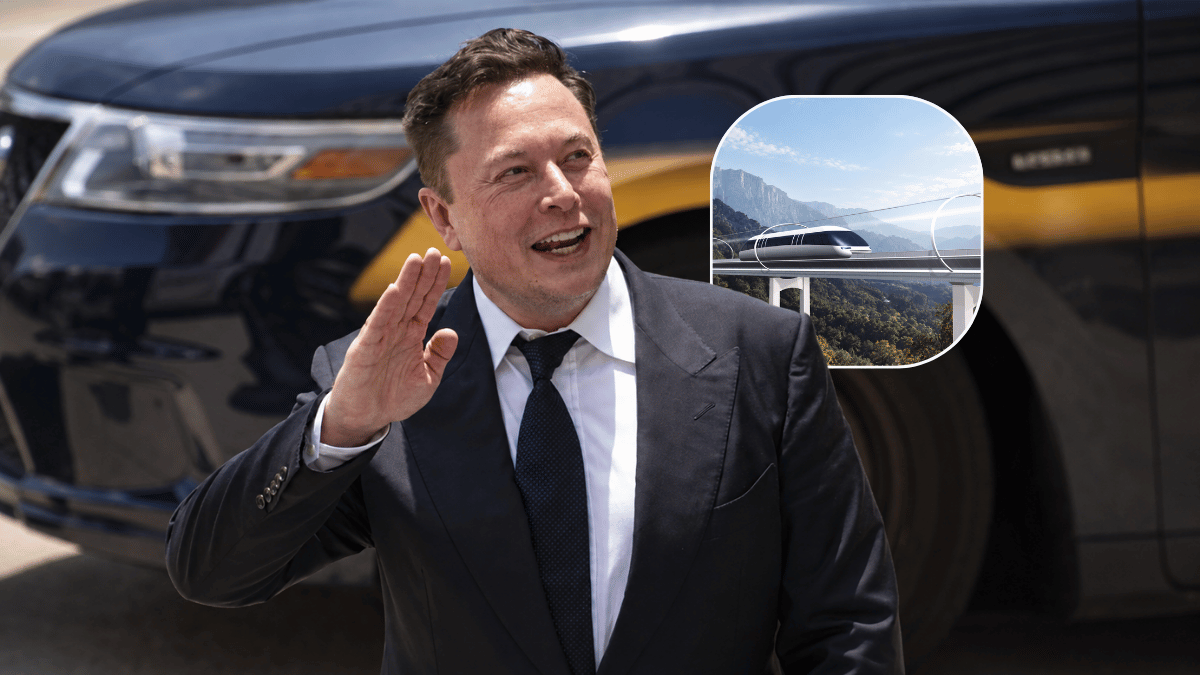
Drivers between Austin and San Antonio sit on one of the most congested roads in Texas. On Sunday evening Elon Musk offered them a tunnel: the Boring Company, he posted, is working on a simple precursor Hyperloop between the two cities, running at more than 200 mph and turning a trip that congestion can stretch to two and a half hours into a consistent sub-30 minutes.
Everything the post did not say
The post ran to two sentences and 5.2 million views, and it left out the rest. No route, no cost, no financing structure, no completion date, and no word on whether passengers would travel in ordinary electric cars, purpose-built pods, or the low-pressure tubes the original Hyperloop idea called for. Nobody has been named as a government partner and no permit or approval has been announced, which puts this closer to an early proposal than a funded project. The Boring Company's own account said it would be excited and honoured to build the thing. Musk's remark arrived as a reply to an AI-generated science-fiction video he had re-posted with the line, “This is the future we shall bring into being”.
The tunnels that exist, and the ones that never did
The company's record splits cleanly in two. Announced tunnels in Chicago, Los Angeles and between New York and Washington were never built. The Vegas Loop does run, carrying passengers in Tesla cars through tunnels under the Las Vegas convention centre and the streets around it; a tunnel in Nashville started this year; a Dubai Loop is meant to begin at the end of 2026; and in Bastrop, Texas, the company is digging tunnels between properties Musk owns so staff from Boring, SpaceX, Tesla and X can move between them. It raised $3 billion this month in a round led by investors from the United Arab Emirates.
Hyperloop itself is a thirteen-year-old idea. Musk described it in a 2013 paper, with pods travelling through low-pressure tubes at close to the speed of sound. Several companies tried to build one, and none of them carries a paying passenger today.
The corridor is the strongest part of the case. Austin and San Antonio are among the fastest-growing cities in the United States, their downtowns sit about 80 miles apart by road, and the state transport department is already studying traffic across a dozen counties between them. At an average 200 mph, Billionaires.Africa works out, that distance takes about 24 minutes before slowing for stations. A route that long would need regulatory approvals, safety testing and land-access agreements, and none of those has been announced.