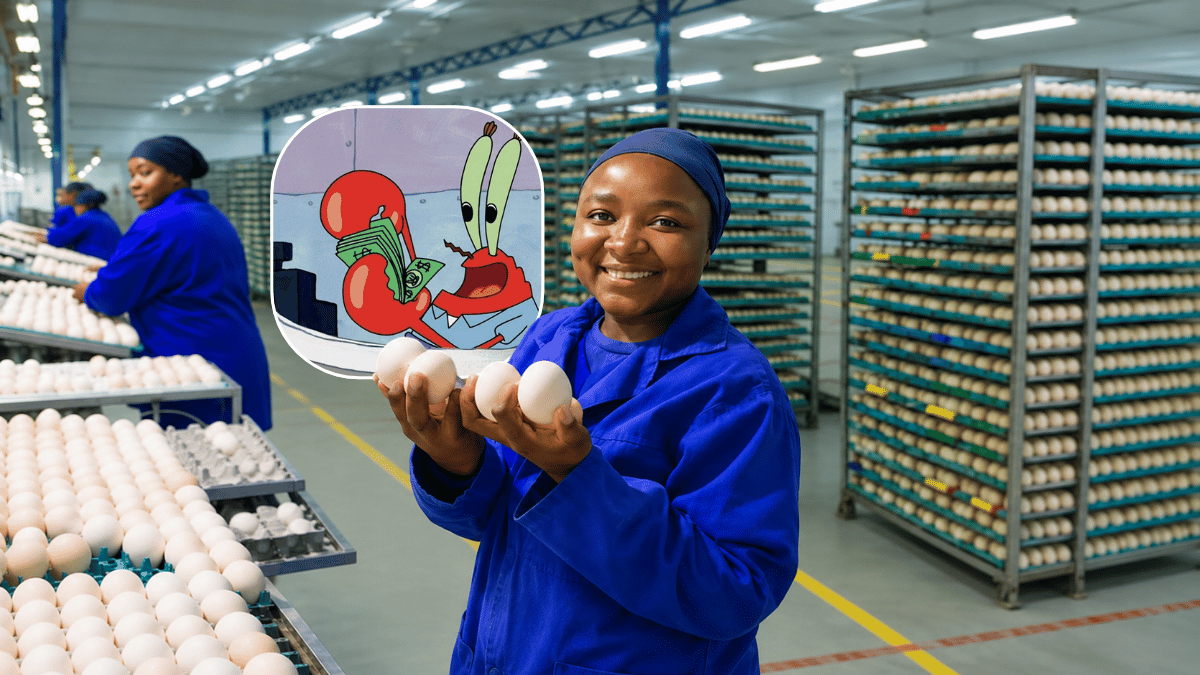
Astral Foods, South Africa's biggest poultry producer, made R1.74 billion in profit in the year to September, nearly double the year before. And here's the thing: it actually sold less chicken. Revenue rose only 2.8% to R23.26 billion, and poultry sales volumes fell 2%, which Astral put down to softer demand through winter and constrained consumer spending later in the year. That's even though it slaughtered more birds, an average of 6.1 million a week, up from 5.8 million.
Why cheaper feed made such a difference
So how did it pull that off? Feed accounts for about 65% of the live cost of raising a broiler chicken, and average maize and soya prices fell over the year, giving Astral significantly lower feed costs. Because Astral owns the whole value chain, from feed production to broilers, it got to keep that saving and protect its profit margin. Overall, profit before interest and tax rose 88% to R2.35 billion.
Its Feed division did well too. Revenue there dipped 3.8% to R10.4 billion as prices fell, but sales volumes rose 6.3%, and operating profit grew 13.8% to R812.1 million. Shareholders were rewarded as well, with headline earnings per share more than doubling to 4,439 cents and the total dividend doubling to 2,220 cents a share, up from 1,100 cents. The final dividend of 1,060 cents will be paid on 18 January 2027, and the group ended the year with 42% more cash.
A strike Astral can't yet put a price on
But there's a cloud. A strike at Astral's Festive operations began on 29 October, after the financial year ended, and Astral says that while it's still carrying direct costs, the financial impact can't yet be reliably determined. According to GlobalData, the Casual Workers Advice Office says thousands of workers are involved and is demanding a minimum wage of R13,500 a month. Astral disputes that, saying about 400 of the more than 2,500 employees at its Olifantsfontein plant are taking part, and that production there has returned to normal levels.
Looking ahead, Astral is also wary of sharply higher fuel costs eating into household budgets, and of El Niño weather putting the summer grain crop at risk. Cheap feed made this a bumper year, which means a jump in maize prices would hit just as hard in the other direction.