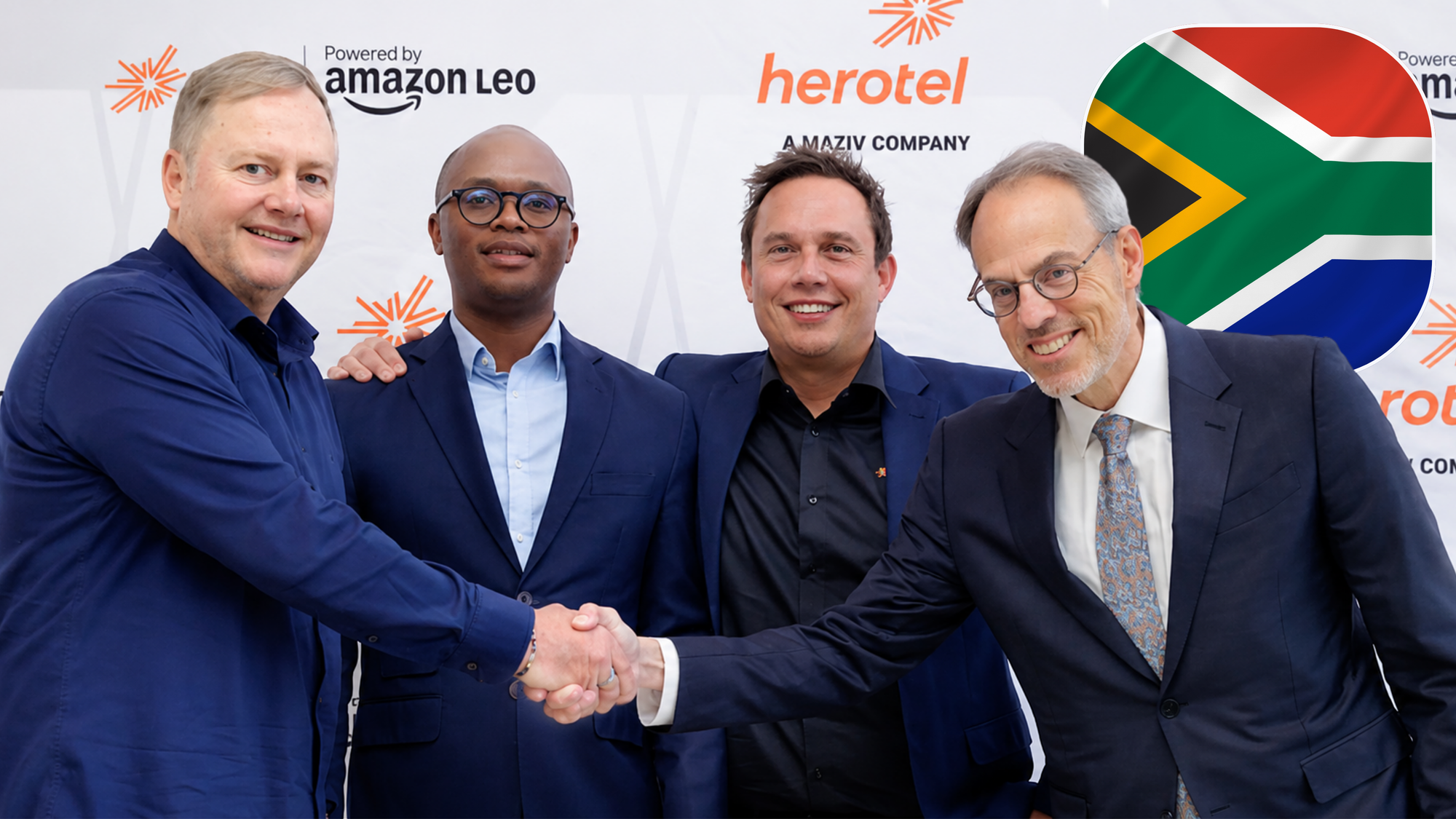
For years, satellite internet in South Africa has really been the Starlink story: Elon Musk refusing to meet local ownership rules, branding them "racist", and staying out while his service went live across much of the continent. Now Amazon has walked through a different door. The company said it will launch its Amazon Leo satellite service in South Africa in 2027 through Herotel, the Maziv-owned provider, which will sell it to homes and small businesses as a service called Evry, with sign-ups already open. Communications minister Solly Malatsi joined the announcement, giving the deal a government stamp.
The workaround Starlink wouldn't take
The structure is the real news. Herotel will hold the ICASA licences, so Amazon never needs its own, neatly sidestepping the rule requiring 30% ownership by historically disadvantaged groups that has kept Starlink out of the country. It is the very requirement Musk refused to meet, even as Starlink launched across roughly two dozen other African markets. Where SpaceX dug in, Amazon simply partnered with a licence holder and moved on.
What Evry promises
For customers, Evry is pitched at the parts of the country fibre never reached. It promises download speeds of up to 300Mbit/s, with Amazon's larger residential antenna rated up to 400Mbit/s, and latency of around 50ms. Those speeds ride on a constellation Amazon is spending more than $10bn to build. "We have always believed that South Africans outside the major metros, whether on farms, in small towns, in townships or in rural communities, deserve reliable, affordable internet," said Herotel CEO Van Zyl Botha.
Two cautions temper the excitement. Amazon has not switched on a commercial Leo service anywhere in the world yet, with only about 390 satellites in orbit so far, and while it calls this its first such deal in Africa, its own executive would not confirm that claim. Even so, for the millions of South Africans beyond fibre's reach, a credible Starlink rival arriving with government backing changes the map, and it puts a 2027 date on when the race for the rural customer really begins.
There is a subplot worth watching, too: Vodacom holds a 30% stake in Herotel's parent, Maziv, so South Africa's biggest mobile operator already sits close to the country's first big satellite-internet play.