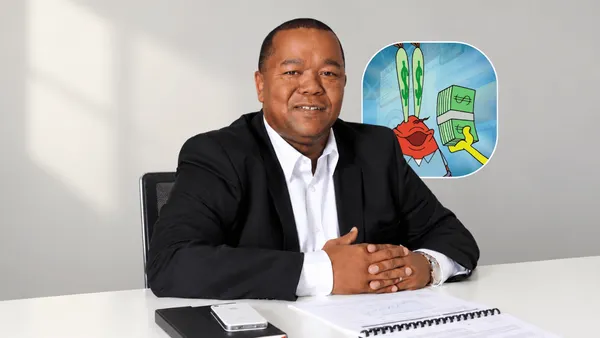
Absa's new boss is thinking big. In a recent interview, chief executive Kenny Fihla laid out a plan to turn the red bank into what he calls "the J.P. Morgan of Africa." Investors, so far, are less convinced.
The vision
Fihla's ambition runs on a few tracks. First, win back the number-one spot in South African retail banking, where he says Absa still has the scale to claw its way back. Second, launch Absa's own mobile network late in 2026, borrowing the partnership-heavy playbook of Kenyan payments giant M-PESA. Third, capture more of the money moving between Africa and the rest of the world, building on a footprint that spans 12 markets. At the top end, Absa wants to turn its Mauritian operations into a hub for the continent's wealthy, tapping an African middle class the development bank puts at around 355 million people. To get there he has hired a wave of senior bankers, several from his old employer Standard Bank, including former M-PESA Africa boss Sitoyo Lopokoiyit. Absa is also pushing deeper into East Africa, seeking to lift its stake in its Kenyan unit to 85% through a $238.7 million offer.
The market's verdict
The share price tells a different story. Absa is down about 10% this year, with much of the drop coming after Goldman Sachs and Avior turned cautious. The trigger was a June update warning that first-half earnings would grow only in the low-to-mid single digits. The deeper worry is Absa's net interest margin, the gap between what it earns on loans and pays on deposits, which is being squeezed as interest rates fall in Kenya and Ghana. Slowing revenue also threatens Absa's targets of a 16% return on shareholder equity this year and as much as 19% by 2028. One analyst now expects no recovery in the share price for a year. The sell-off revived memories of Absa's turbulent 2019-to-2025 stretch, when it churned through six chief executives in six years before Fihla arrived.
It isn't all bearish: six of eleven analysts still rate Absa a buy, and the shares trade at a steep discount to peers. The real test comes on 18 August, when Absa's first-half results will show whether Fihla's vision is starting to translate into numbers.