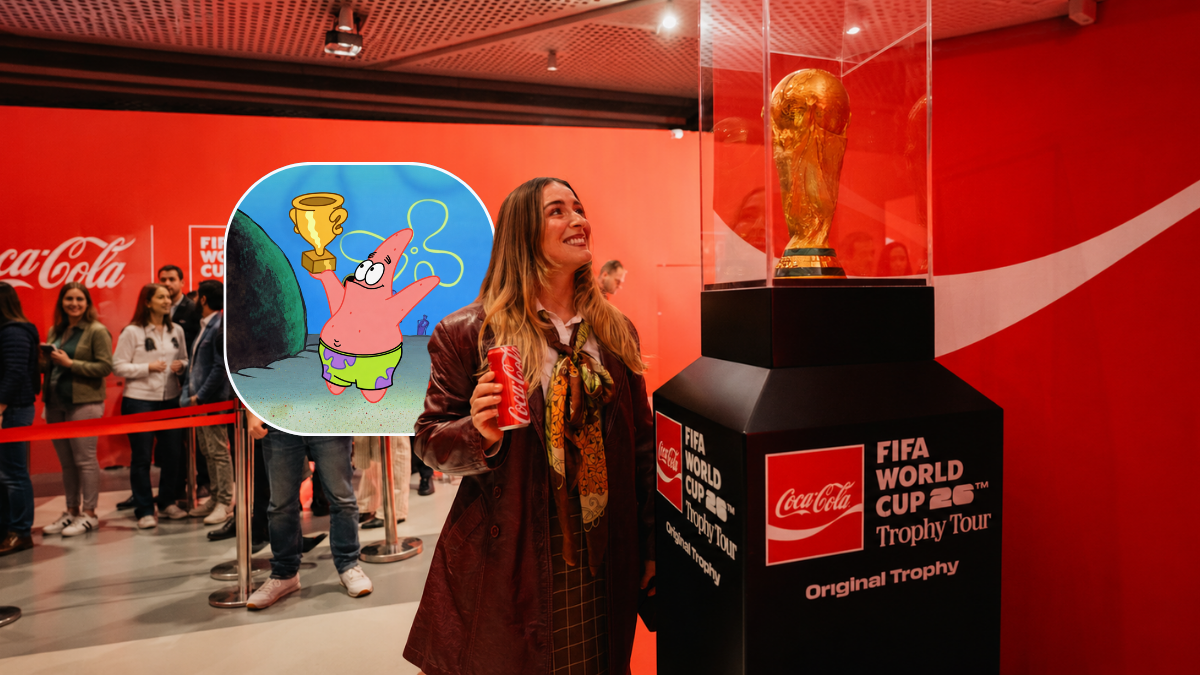
It turns out a World Cup sells a lot of fizzy drinks. Coca-Cola beat Wall Street’s expectations for the second quarter and lifted its outlook for the year, crediting a global marketing blitz around the FIFA World Cup for a jump in demand.
Net revenue rose 7% to $13.4 billion, ahead of the $13.16 billion analysts had pencilled in, while reported earnings climbed 16% to $1.03 a share. Unit-case volume, the drinks-industry measure of how much actually got sold, grew 5% — Coke’s biggest quarterly jump in 17 years outside the pandemic — led by India, China, the United States and Brazil.
The World Cup effect
The tournament was everywhere in the numbers. Coca-Cola says it ran its campaign across more than 180 markets and 20 million retail outlets, generating over 60 billion impressions online with the help of more than 2,500 content creators. That push fed into 5% volume growth for Trademark Coca-Cola and 8% for the sports drink Powerade over the quarter. Zero-sugar Coke was another standout, growing 16% across every region, while a caffeine-boosted relaunch of Mr Pibb sent that brand’s volume up 20%. “We had, during the World Cup, really a great opportunity for us to shine our brands,” CEO Henrique Braun said on CNBC. “During the hydration breaks, Powerade was there.”
Shoppers still spending
The results stood out against a jittery backdrop for consumer companies. Rival PepsiCo had just warned that tighter household budgets were denting US sales of its snacks and drinks — but Coke saw no such pullback, with volumes even in North America up 3%. Braun acknowledged a “dynamic” landscape of inflation and economic uncertainty, but said his brands kept gaining share.
On the back of the quarter, Coca-Cola raised its full-year guidance, nudging its organic revenue outlook to about 5% growth and comparable earnings growth to 9%-10%, from 8%-9% before. Investors approved: the shares rose more than 7% in morning trading to a record high.
With the World Cup glow now behind it, the question for the second half is whether Coke can keep the momentum going once the tournament’s marketing lift fades and the consumer picture stays uncertain.