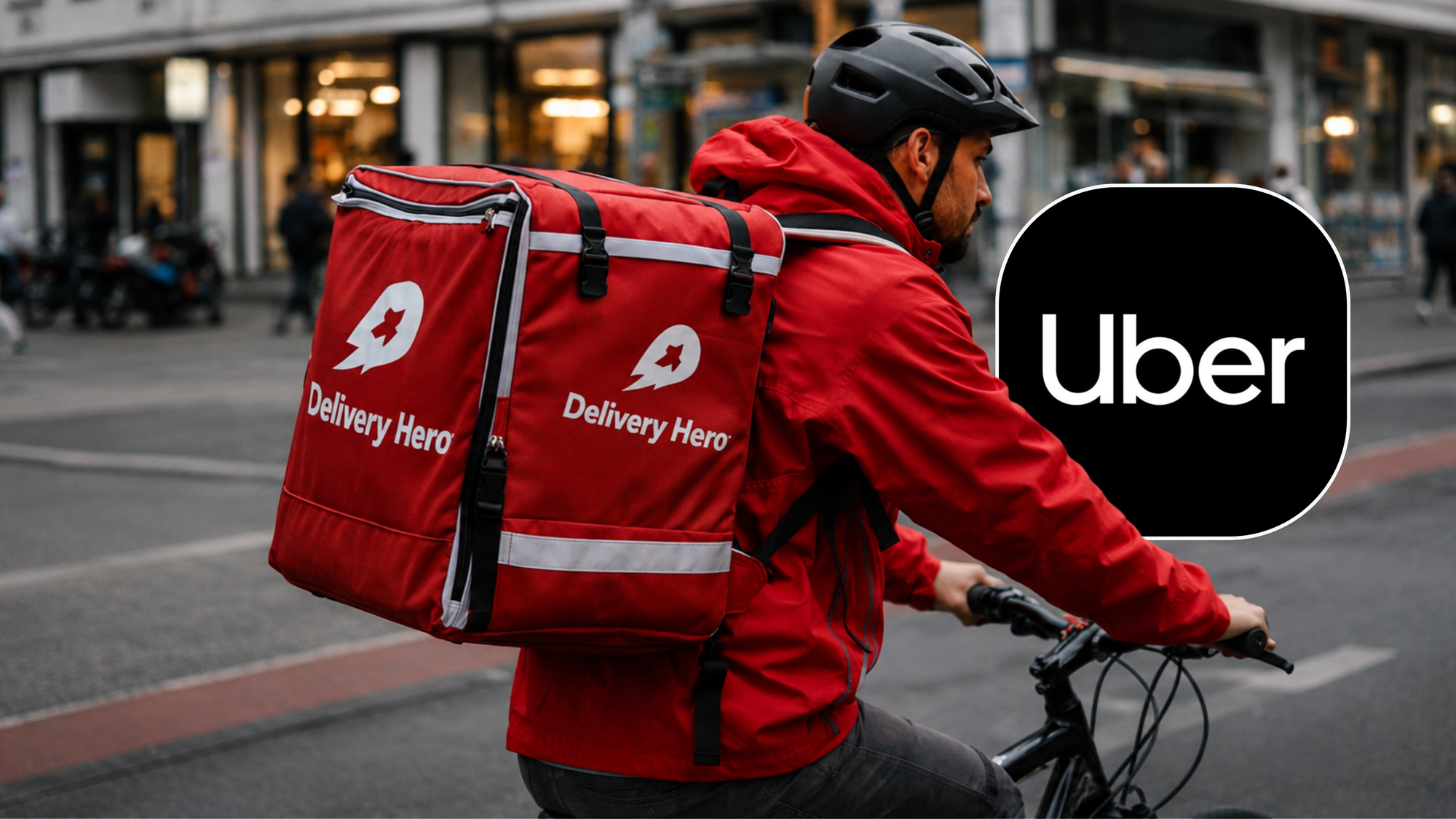
Uber wants to own your takeaway, almost everywhere. The ride-hailing giant has confirmed an offer to buy Germany's Delivery Hero, one of the world's largest food-delivery groups, in a deal valuing it at about $14.8bn. Uber is offering shareholders €41.50 a share in cash, and Delivery Hero confirmed the advanced talks on 14 July.
A global takeaway empire
Delivery Hero is not a household name, but its brands are: Glovo, foodpanda, talabat, PedidosYa and Baemin, spanning roughly 50 markets across Europe, the Middle East, Asia, Latin America and Africa. Its strongholds include talabat in the Middle East and PedidosYa in Latin America, franchises that would hand Uber instant scale in regions where Uber Eats is comparatively thin. Buying it would push the enlarged group into 99 markets, far beyond Uber Eats' heartland. CEO Dara Khosrowshahi framed the prize bluntly, saying the deal would roughly double the size of Uber's addressable mobility and delivery markets.
The antitrust workaround
Swallowing a rival that big invites regulators. To defuse the overlap, Uber has lined up a New York investment firm, SSW Partners, to buy Delivery Hero's operations in 14 markets for about $1.6bn, covering foodora in Austria, Czechia, Norway and Sweden, Glovo in Spain, Portugal, Poland, Romania and Moldova, and several others where the two companies compete head-to-head. It is a pre-emptive carve-out designed to smooth the path past competition authorities.
The African angle
For South African readers, the thread worth following is Glovo, which operates across parts of Africa. A change of ownership at this scale rarely leaves local operations untouched, and it folds Africa's fast-growing on-demand delivery market into a much bigger global contest between Uber and the handful of players left standing. The price tag has climbed as talks advanced, from about €10bn when Uber first approached in May to €12.5bn by mid-July, a sign of how badly Uber wants to consolidate the business of bringing dinner to your door. The offer still needs shareholder acceptance and regulatory clearance, so the map may yet be redrawn before any of it is final.