

Today’s edition
Ground Control
Good morning, and welcome to your Wednesday Roundup. We’re clearing up what’s actually stopping Starlink from launching in South Africa, Claude has found a way to do more with less, and Clicks is making a half a billion rand move into premium beauty. Let’s get into it.
MARKETS
FAILURE TO LAUNCH

Starlink could qualify without selling a single share, but the regulator says the law has to change first
Starlink started selling satellite internet in Nigeria and Rwanda in 2023, and by June it had over 25 African countries. South Africa is still not one of them, and the hold-up looks less like a standoff than a queue of paperwork.
The rule says anyone holding a telecoms licence here must be at least 30% owned by historically disadvantaged groups. There is a second way in that needs no shares: equity equivalent programmes let a foreign company earn empowerment status by spending on things like small suppliers and jobs instead. Microsoft, IBM and Amazon Web Services have used it, and Starlink has offered free broadband to 5,000 rural schools as a start.
Where the queue stands:
- Government has gazetted a final policy direction telling ICASA to accept those programmes instead of the 30%.
- ICASA says it cannot fully accept that alternative under the current law, meaning Parliament still needs to amend the Electronic Communications Act before it can.
- As of June, ICASA had not received a single licence application from Starlink.
The latest update came on Monday, when deputy communications minister Mondli Gungubele said Starlink is welcome in South Africa if it respects the country’s equity rules, and confirmed that talks are continuing. So while government and ICASA work through that legal roadblock, there may be another wrinkle: as of June, Starlink itself still hadn’t submitted a licence application.
TOKEN GESTURE

Anthropic's new Claude model charges the old price, and still finishes most jobs for up to 30% less
If you use ChatGPT or Claude, you’ve probably noticed these companies keep releasing different models, and they’re not all supposed to do the same thing. Some are extremely powerful but expensive, while others are designed to be faster and cheaper. Anthropic has just released Sonnet 5.5, the latest version of its middle model, and it’s getting surprisingly close to the expensive one. It’s more than 30% faster and can cost up to 30% less to complete the same task.
Importantly, Anthropic hasn’t actually lowered the price. Sonnet has simply become more efficient, getting the same work done using less computing. One investment firm tested it across more than 2,400 finance tasks and found it performed better than the previous Sonnet while using roughly a quarter of the resources. For businesses running AI across thousands or millions of tasks, those efficiency gains can make a big difference to the bill.
And that’s becoming a big part of where AI is going: not just building smarter models, but getting the same quality of work done faster and for less money.
BAGEL BITE
How many basic tastes can the human tongue detect?
A. Three
B. Four
C. Five
DOING THE ROUNDS

Since 2021, Clicks has owned a minority stake in ARC, the premium beauty chain behind Africa's biggest beauty store in Sandton City. Now it wants control, and it's agreed to pay the founding shareholders R507 million for just over a third more of the business, taking it to 61%. They already share customers, and ARC's shoppers spent 836 million rand at Clicks last year. ARC's managers have committed to stay until at least 2028, but the competition authorities still have to approve it. Full story →
South Africa is doing most of the heavy lifting for JSE-listed property group Burstone right now. Its local malls and offices should generate around 80% of its income this half, with property income growing more than 7%. Europe is the problem: its warehouse business there is earning less as vacancies rise and borrowing gets more expensive. That’s pushed first-half earnings growth slightly below target, although Burstone is sticking to its full-year forecast and has agreed early terms to sell most of its European stake to Blackstone. Full story →
The JSE is no longer the only stock exchange South Africa's biggest companies want to be seen on. From the 6th of October, Sibanye-Stillwater's shares will also trade on A2X, a secondary exchange that opened in 2017 and sells itself on lower trading fees. Nothing else moves: the JSE stays its main listing, the New York listing stays, and no new shares are issued. Sibanye says the point is to give investors more choice and help its shares change hands more easily. Capitec made the same move earlier this month. Full story →
WEATHER
BAGEL GAMES
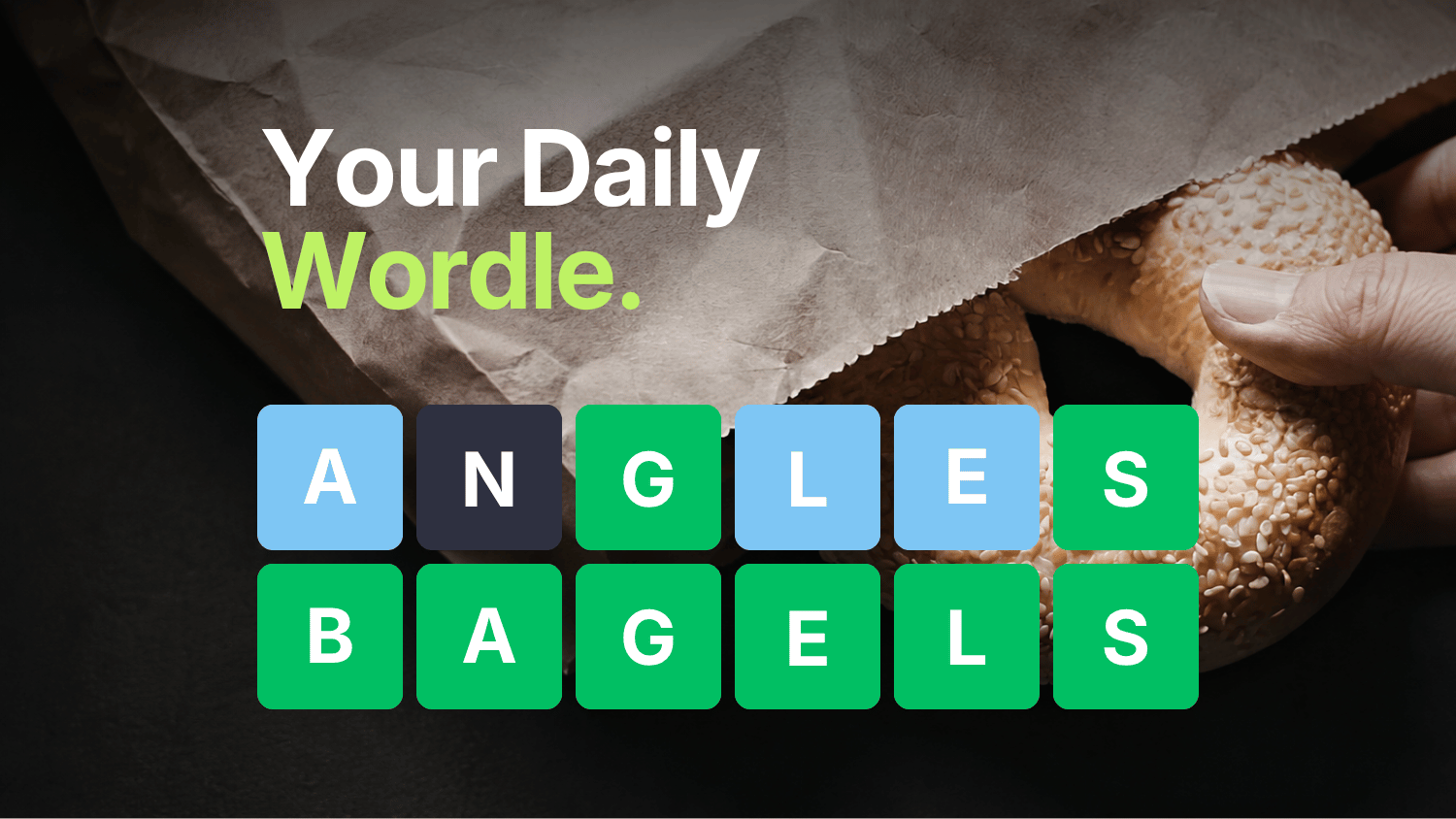
Have you got what it takes to win today’s Wordle? Play here →
THE ANSWER
As for the Bagel Bite, the answer is: C. Five
For a long time only four tastes were recognised, until umami, the rich savoury flavour found in foods like tomatoes and cheese, was officially added as the fifth. Each taste is picked up by receptors spread across the tongue, not in fixed zones as once believed. These basic tastes combine with smell to create the full flavours we enjoy. Spiciness is not a taste at all but a sensation of heat.
That's your Wednesday sorted. Enjoyed it? Forward it on, a friend can subscribe in a click. Written by the Business Bagel crew.