

Today’s edition
Going Halves
Presented by
Good morning, it’s Wednesday the 21st of October. One of South Africa’s biggest property developers has left the JSE after 11 years, and its new owners reckon they’ve picked up a bargain. Meanwhile, President Ramaphosa is planning a trip to Silicon Valley to learn about AI, and COSATU wants Shein and Temu banned. Let’s get into it.
MARKETS
PRIVATE PROPERTY

The company behind thousands of South African homes has a surprising new major shareholder
Balwin Properties builds thousands of homes every year, making it one of South Africa’s biggest residential property developers. You’ve probably seen its estates around Joburg, Pretoria, Cape Town and Durban, with their white apartment blocks and lifestyle centres. But after 11 years on the JSE, Balwin has returned to private ownership, with an interesting new investor holding 49.1% of the business: the Public Investment Corporation (PIC), which manages investments on behalf of government employees’ pension funds.
Business has been improving, too. In its latest annual results, Balwin reported a 21% increase in revenue to R2.7 billion, while profit rose 9%. Apartment sales have been recovering as interest rates have eased, but despite this, its share price remained well below the R10.25 at which it listed in 2015. With no dividends for 2 years, shareholders overwhelmingly supported an offer to take the company private, with more than 98% voting in favour.
Why the PIC thinks it got a bargain:
- It paid: R4.35 a share, about R1.12 billion for roughly half of Balwin.
- Its own valuer says: R8.46 a share, almost double.
- It's in for: nine to twelve years, aiming for about 17% a year.
Much of that value sits in R6.9 billion of homes still being built, so the payoff depends on Balwin delivering them.
STUDY ABROAD
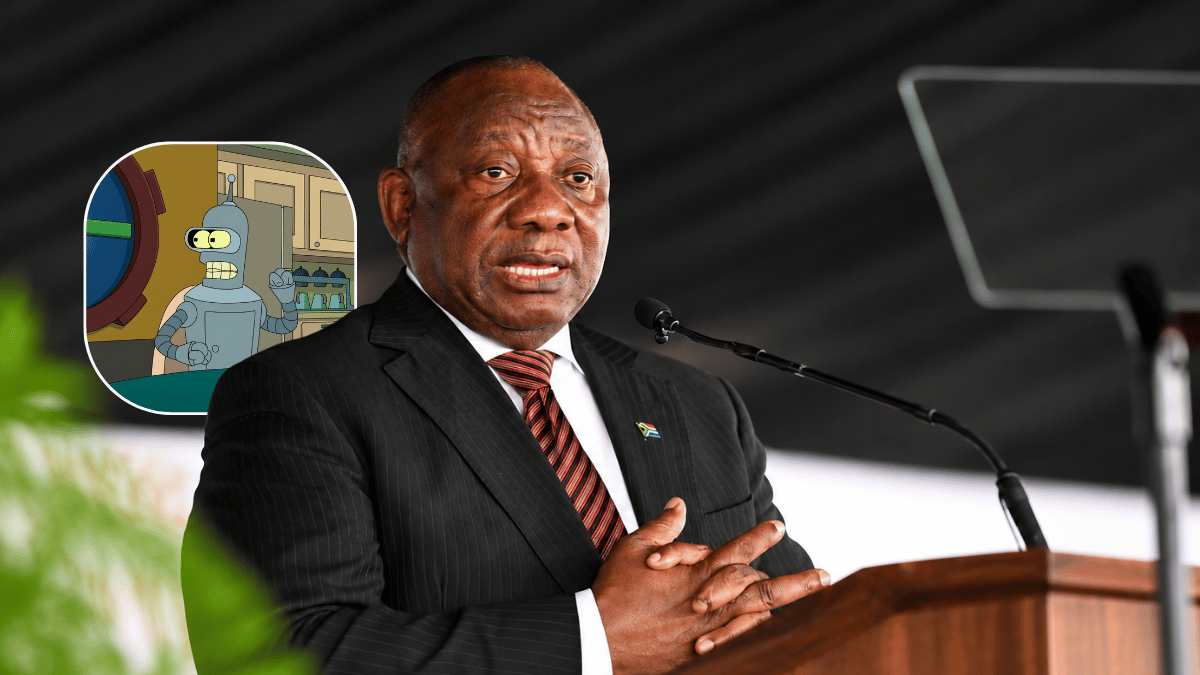
Ramaphosa is planning a trip to Silicon Valley to learn about AI, and government has plenty to learn
President Cyril Ramaphosa wants a better understanding of artificial intelligence, and he's planning a trip to Silicon Valley to get it. Speaking at an ANC event in Johannesburg on Monday, he said he'll lead a delegation there after the November elections: officials, academics, business leaders, young South Africans and, in his words, “some of my comrades”.
He pointed to translation as one opportunity, in a country with 12 official languages, but that barely scratches the surface of what the technology could offer government. Businesses are already using AI to cut costs and streamline how they run, and the state could do the same, from speeding up applications at Home Affairs to connecting systems across departments. The risks are real too, and misinformation is one he has already experienced: an AI-generated picture once put him in a hospital bed beside Paul Mashatile, and it fooled the masses.
It’s one of the many challenges governments face as they begin adopting AI. And as the tech becomes more powerful, those challenges are only likely to grow.
BAGEL BITE
Dry ice is the frozen, solid form of which gas?
A. Carbon dioxide
B. Oxygen
C. Nitrogen
DOING THE ROUNDS

Sygnia shareholders are meeting in Cape Town on Friday to vote on a controversial plan to give employees shares for just 1 cent each. The asset manager wants to expand its employee share scheme to 25 million shares, worth around R600 million at today’s prices. Sygnia says the scheme will help attract and retain talented staff, but some shareholders aren’t convinced. They argue it could enrich the company’s founder and other top executives at the expense of ordinary shareholders. The board supports the proposal, but it needs 75% shareholder approval to pass. Full story →
If you’re a COSATU member with Shein or Temu on your phone, the trade union federation wants you to delete them. COSATU has backed a campaign to ban both platforms, arguing they’re hurting South African businesses and jobs. Research by the Localisation Support Fund estimates the companies made R7.3 billion in local sales in 2024, while preventing around 8,100 jobs from being created. But the country’s clothing retailers’ federation isn’t convinced a ban is the answer, arguing that the problem is far more complicated than simply removing two shopping platforms. Full story →
Nedbank keeps 91% of its assets in South Africa, which makes it a bet on a single economy. That's about to change. The bank’s R13.9 billion deal to acquire roughly two-thirds of Kenya’s NCBA Group cleared its final hurdle last week and is expected to close in early November. The acquisition gives Nedbank access to more than 60 million customers across Kenya, Uganda, Tanzania and Rwanda. Nedbank expects NCBA to contribute around 11% of its earnings, helping the bank become less dependent on South Africa for its growth. Full story →
The finance minister delivers his mini-budget this afternoon, and what he says could bring the country closer to its first credit rating upgrade in years. Both Moody’s and S&P review South Africa on 27 November, with major banks predicting that at least one could improve its assessment of the country’s finances. But economists are divided on the timing, with most of those surveyed by Bloomberg expecting an upgrade only in 2027. Even then, South Africa would remain in junk status, although it would be just one step away from investment grade. Full story →
WEATHER
BAGEL GAMES

Have you got what it takes to win today’s Wordle? Play here →
THE ANSWER
As for the Bagel Bite, the answer is: A. Carbon dioxide
At normal atmospheric pressure, dry ice turns directly from a solid into a gas without becoming liquid, a process called sublimation. The carbon dioxide gas is invisible. The white fog effect forms when water vapour cools and condenses into tiny droplets. Dry ice sublimates at about minus 78.5 degrees Celsius and can cause cold burns if touched with bare skin. It is widely used to keep goods frozen during transport.
That's your Wednesday wrapped up. Enjoyed it? Forward it on, a friend can subscribe in a click. Written by the Business Bagel crew.