

Today’s edition
Exit Interview
Good morning. African Bank’s finance chief resigned on Friday, six months after the chief executive did the same, and the listing that was supposed to get the Reserve Bank its money back has slid to 2030. Omnia is leaving the JSE after 46 years, sold to an Indian explosives group for R21.8 billion. And Pepkor reckons it can build a bank for less than R1 billion, a job that cost Discovery about R15 billion.
Two doors out, one door in. Let’s get into it.
MARKETS
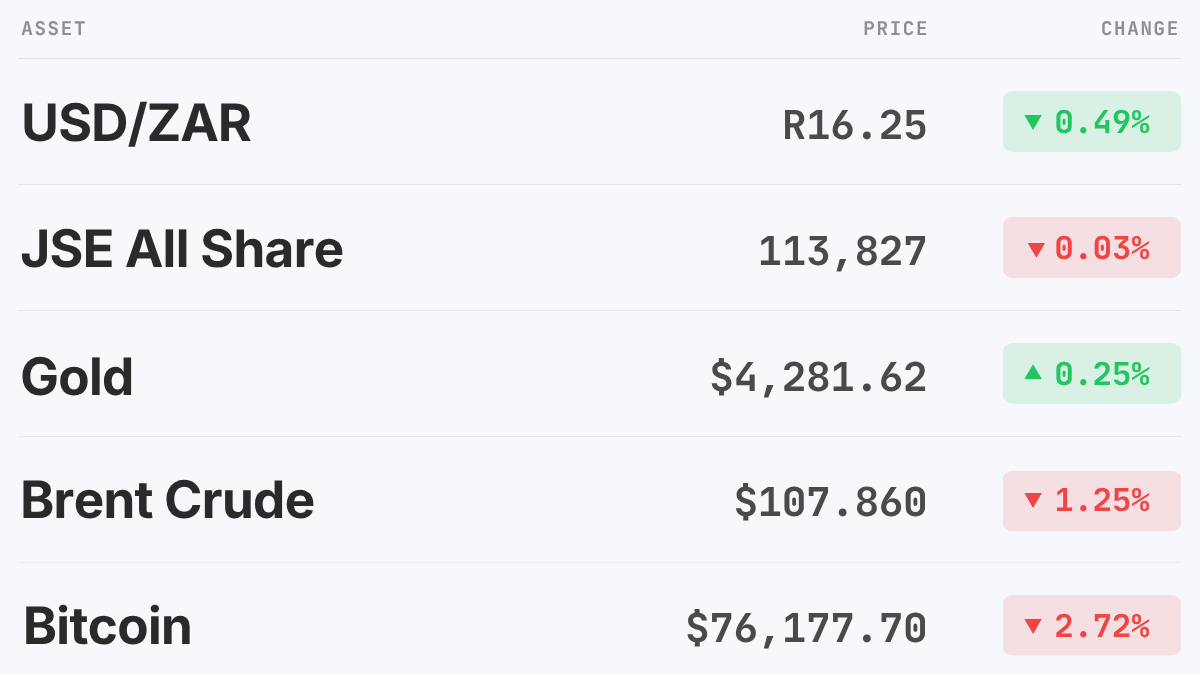
SECOND EXIT
African Bank’s finance chief has quit, and a listing promised for 2025 is now aimed at 2030
You may remember that back in 2014, the Reserve Bank had to step in to rescue African Bank after it ran into serious financial trouble. As part of the restructuring that followed, the Reserve Bank ended up owning a large chunk of the new African Bank. Today, that stake sits at 45%. The Government Employees Pension Fund is another major shareholder, with a 22.5% stake.
On Friday it told noteholders that its group chief financial officer, Anbann Chetti, had resigned with immediate effect to pursue other opportunities, standing down from three boards and five committees the same day.
That is the second immediate exit from the top of this bank in six months. Kennedy Bungane went the same way as chief executive in March. As a result, Bhutana Mabena, who joined from Absa this year to run unsecured lending, takes the finance job in an acting capacity, and inherits the numbers behind the churn.
What is stuck behind the listing:
- African Bank originally targeted a stock-market listing for 2025, giving its major shareholders a potential route to reduce their stakes.
- That target was pushed back to 2028, and the bank now expects the listing to happen around 2030.
- The latest delay means the Reserve Bank and Government Employees Pension Fund could remain major shareholders for several more years.
Explaining that timetable to the market was Chetti’s job, and it now belongs to an acting appointment.
TILL FURTHER NOTICE
The company that sells you school shoes wants to open its own bank next year
Building a bank in South Africa has generally meant spending years and billions before a single customer walks in. Discovery put about R15 billion into Discovery Bank over eight years before its first annual profit landed this June. Old Mutual’s new bank cost roughly R2.8 billion to put together. So one line in Pepkor’s trading update on Monday is worth stopping on: PlusB, the bank behind the PEP and Ackermans tills, will cost less than R1 billion, and the company says it is still on budget.
Pepkor’s answer is that it is not building most of a bank. It already has 6,677 shops, 18 million people on its rewards programme, and an informal-trader network in Flash that pushed R58.4 billion through in ten months. It bought the software rather than writing it, paying R224 million for a fintech called CloudBadger whose system still runs a Standard Bank operation in eSwatini.
What the banking licence actually buys is cheaper money, because a bank funds loans with deposits instead of borrowing them first. By 2032 it wants R8 billion in those very deposits.
BAGEL BITE
What colour is a polar bear's skin under its fur?
A. White
B. Pink
C. Black
DOING THE ROUNDS

Another South African company is leaving the JSE, and this one has been listed since 1980. Omnia makes the explosives that open mines and the fertiliser that feeds crops, and India’s Solar Industries is buying the lot for R21.8 billion in cash, about a third more than the shares fetched before word got out. Solar is worth roughly R340 billion at home, so outbidding Johannesburg was never going to be hard. Shareholders get no stake in the buyer: Indian companies still cannot simply add a JSE listing. Full story →
Shoprite has just granted thirteen of its executives R115 million worth of shares. Nobody got a cheque. Part of it is bonus money already earned for the year to June, handed over as shares that stay locked for two years. The rest only becomes theirs in three years, and only if the performance targets land. Chief executive Pieter Engelbrecht has the biggest allocation at R35.5 million. Leave early or miss the targets and the shares go back to the company. Full story →
Attacq owns the Mall of Africa outright and is still building the city around it. The year to June beat what the company had told investors to expect. The dividend rose 17.2%, the buildings are fuller, and almost every rand of rent billed came in. Rooftop solar covers more than a tenth of the electricity those buildings use, and the saving feeds through to shareholders. Debt sits at a quarter of the portfolio’s value, low for a listed landlord. The final 54 cents lands on 12 October. Full story →
A Boeing 767 carrying cargo for Amazon ran off the end of a runway at Miami International on the 6th of September, killing 5 people on the ground. The plane was operated by cargo airline 21 Air, which Amazon uses to move some of its freight. On Sunday, Amazon said it had reviewed the circumstances and was pausing operations with the airline. Full story →
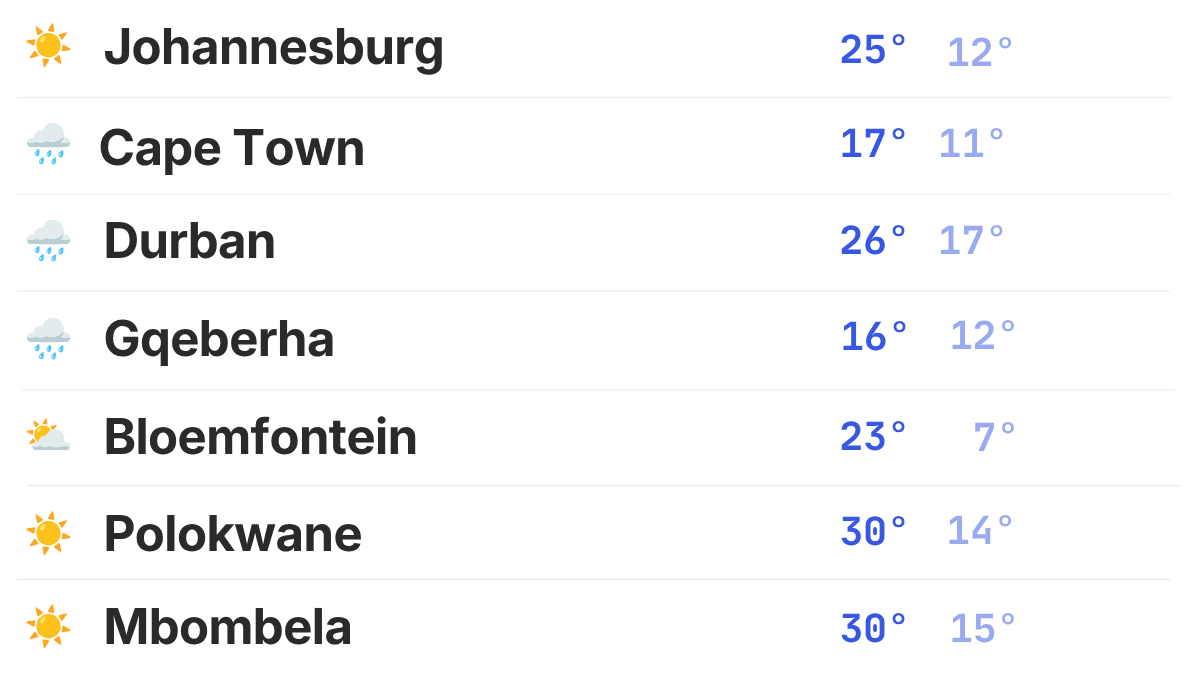
WEATHER
BAGEL GAMES
Have you got what it takes to win today’s Wordle? Play here →
THE ANSWER
As for the Bagel Bite, the answer is: C. Black
Polar bear fur is not truly white. Each hair is pigment free and transparent, with a hollow, air filled core that scatters and reflects light, making the coat appear white against the snow. Beneath the fur, the bear’s skin is black. Its two thick layers of fur trap insulating air and reduce heat loss, helping it survive the Arctic cold. So the animal we picture as pure white actually has black skin beneath see through fur.
That’s your Wednesday sorted. Enjoyed it? Forward it on, a friend can subscribe in a click. Written by the Business Bagel crew.