Today's edition
Filling In
Good morning. Abu Dhabi's ADNOC is paying about $1 billion for Shell's South African petrol stations, and on Friday it named the local partner it needs to run them. Nvidia is passing its memory bill straight to its biggest customers, and the state is asking private money to fund the R1.99 trillion of projects it cannot pay for itself.
Nobody is carrying the whole bill today. Let's get into it.
MARKETS
NAME AT THE PUMP
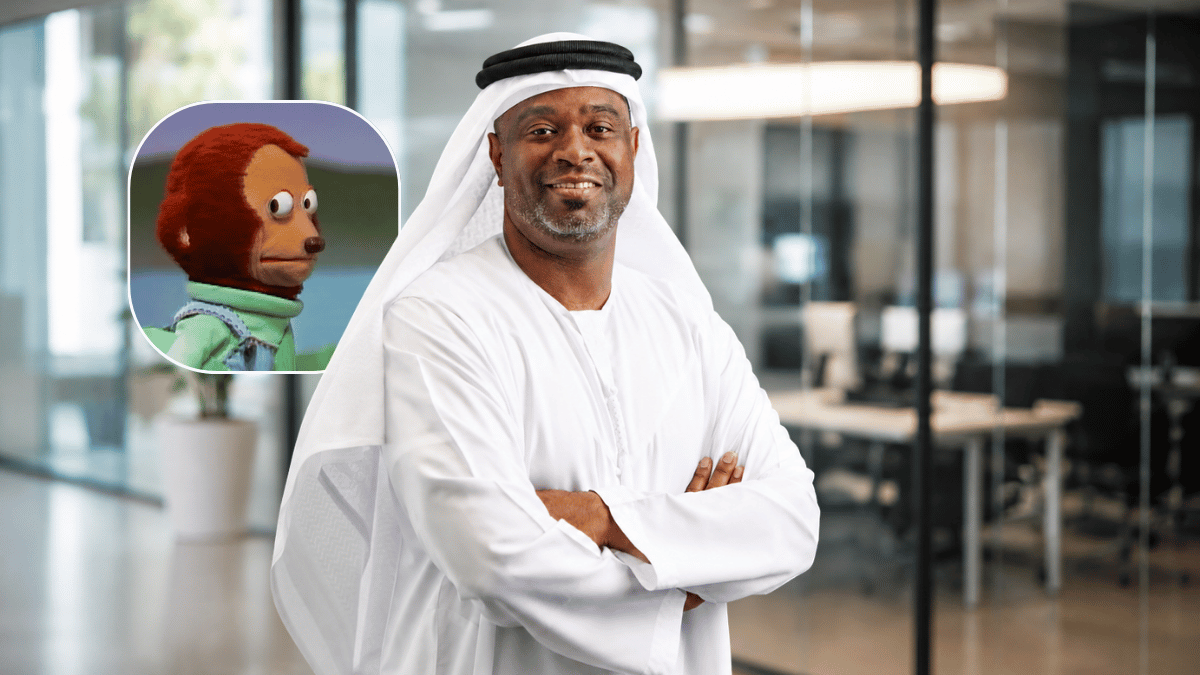
ADNOC has named Reatile as the South African partner in its $1bn Shell forecourt deal
Shell has been trying to get out of its South African fuel business for a while. Talks with the commodity trader Gunvor came to nothing, and then in July a buyer turned up from the Gulf. ADNOC Distribution, the retail arm of Abu Dhabi's state oil company, agreed to pay about $1 billion for 100% of it. That is 580 company and dealer-owned forecourts, plus wholesale fuel, aviation and lubricants.
Buying the whole thing is one problem; operating it in South Africa is another, and that takes a local shareholder. Late last week, ADNOC named Reatile Group, a South African energy investor with 23 years in the sector, taking an undisclosed minority once the deal closes.
Who gets what:
- A 28% stake was earmarked in July for a local empowerment partner and an employee share scheme. Neither side would say how much of it goes to Reatile, which is founded and chaired by Simphiwe Mehlomakulu.
- South Africa would be the fourth country ADNOC Distribution operates in, after the UAE, Egypt and Saudi Arabia, and it expects the deal to lift its earnings per share 6% in the first full year.
ADNOC will licence the Shell name for the stations and the lubricants, so the forecourt looks the same while the owner behind it changes. Regulators still have to clear it, which ADNOC expects in 2027.
APP AND AWAY

As TFG announces potential retrenchments, Bash is becoming increasingly important
Moneyweb reported on Monday that The Foschini Group, owner of Foschini, Markham and Sportscene, has opened a formal retrenchment consultation covering part of its head office. TFG confirmed the process but would not say how many roles are involved.
It comes as the retailer cuts back its physical footprint. About 300 of its 4,914 stores are considered marginal, with around 100 closed last year and just over 100 more expected to close this year. CFO Ralph Buddle says a smaller store base also means reducing the overhead behind it.
Bash, however, is moving in the opposite direction. The platform helped online sales in TFG Africa grow 49.2% last year, reaching 8.2% of the division’s sales and 10% in the fourth quarter. CEO Anthony Thunström says Bash’s extra R1.1 billion in sales would have required more than 100 new stores and about R500 million in shopfitting and stock to match physically.
Bash is still a small but rapidly growing part of TFG Africa, and as stores close and costs are cut elsewhere, its role is becoming increasingly important. It’s already TFG’s standout success story. The question is how vital it could become to the group’s future.
BAGEL BITE
What is the smallest bone in the human body?
A. Stapes
B. Malleus
C. Incus
DOING THE ROUNDS

Eskom's diesel bill has fallen 83% in a year, to R992m. Diesel has been getting more expensive since April, after the US-Iran war disrupted global oil supply, and Eskom's answer was to buy far less of it: R992m in the financial year to 20 August, against R5.92bn a year earlier. It could afford that because the coal stations broke down less, with average unplanned outages down 39.2% and the emergency turbines running at an eighth of last year's rate. The country has now gone 462 days without load shedding. Full story →
MTN is skipping the interim dividend and spending R6 billion on its own shares instead. The buyback sits inside a framework that returns 40% to 60% of spare cash to shareholders each year, and it has not started yet. Underlying earnings per share rose 21.3% to 793 cents on service revenue of R115.3 billion. Bottom-line profit fell 25% to R7.41 billion, after a R3.9 billion writedown in Iran. Full story →
Nvidia is passing its memory bill on to its biggest customers. Bloomberg reports that some of the company's largest buyers have been told servers built around its AI chips will cost more than 15% extra, on systems shipping early next year. Memory chips are the choke point in the AI build-out, and a company that keeps about 75 cents of every sales dollar could not hold the line on a bill set by Samsung, SK Hynix and Micron. Nvidia did not respond to requests for comment. Full story →
South Africa has a R1.99 trillion list of state projects, and R1.21 trillion of it is still on paper. Ninety of the 263 projects are sitting at the feasibility stage with nothing in the ground, while 82 worth R502.7 billion are under construction. Public Works Minister Dean Macpherson told an infrastructure symposium in Cape Town that projects stall because studies are incomplete, approvals are delayed and funding models are unclear, and that the state budget cannot cover the programme alone. Full story →
WEATHER
BAGEL GAMES
Have you got what it takes to win today’s Wordle? Play here →
THE ANSWER
As for the Bagel Bite, the answer is: A. Stapes
The stapes is one of three tiny bones in the middle ear, together with the malleus and incus. These bones, known as the ossicles, transmit and amplify sound vibrations toward the inner ear. The stapes gets its name from the Latin word for stirrup because of its distinctive shape, and it is smaller than both of its neighbouring bones.
That's your Tuesday done. Enjoyed it? Forward it on, a friend can subscribe in a click. Written by the Business Bagel crew.