

Today’s edition
Fuel me once
Good morning. Petrol is heading for a record next month because of a war nobody here started, and Treasury has told Parliament it cannot soften the landing. Apple’s new phones cost $100 more, and the reason is a memory shortage created by data centres. FirstRand’s profit fell for the first time in six years, and all of the damage was done in Britain.
Three bills, none of them written here. Let’s get into it.
MARKETS
TANKS FOR NOTHING
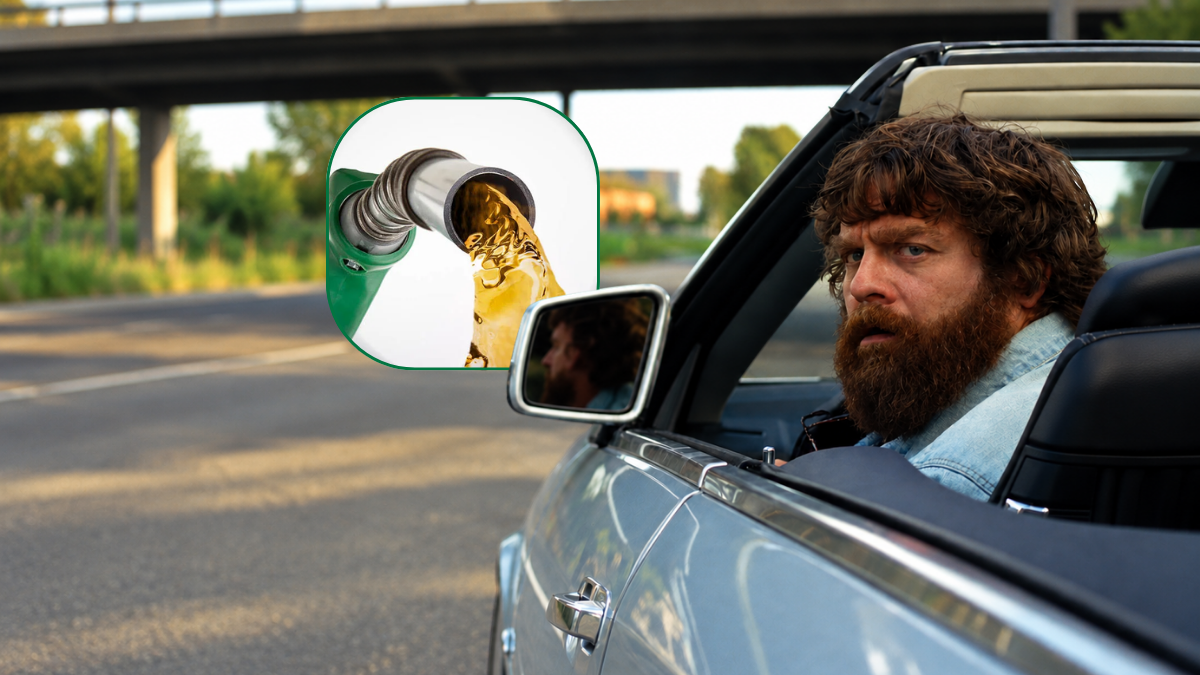
Petrol is heading for a record in October, and the answer on offer is a refinery in Durban
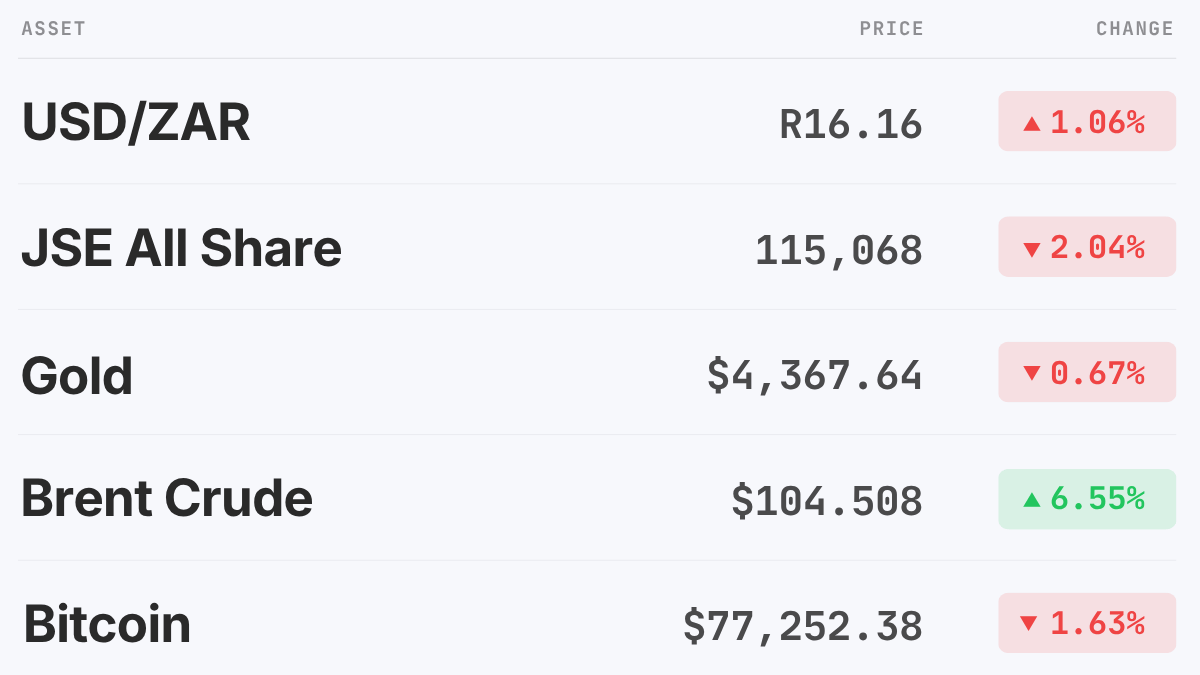
Brent crude went back above $100 a barrel on Wednesday, its first time since July, after the US destroyed five Iranian tankers and Iran said it had struck ships near the Strait of Hormuz. None of that happened here, and all of it arrives here next month.
Early Central Energy Fund data points to about R2 a litre more on 95 unleaded in October, which would take Gauteng to R28.92 and the coast to R28.05, past the records both set in June. How much of an offshore price reaches a local pump depends on how much fuel the country refines itself, and that share keeps falling.
How thin the refining base has become:
- Imports now cover about 61% of South Africa’s petroleum products, against about 22% in 2019.
- Two crude refineries are left, processing roughly 208,000 barrels a day between them.
- Sasol’s Secunda plant makes another 150,000 a day, out of coal.
Treasury has already pulled its one lever, cutting R3 a litre in April and May and putting it back in June and July. On Wednesday the Central Energy Fund set out a three-phase plan to refine crude at Sapref again, the mothballed Durban site it bought from Shell and BP for R1. It named no funder and no date. The October price change is three weeks out.
MEMORY SERVES

Apple’s new iPhones cost $100 more, and so does almost every other new phone this year
Apple showed off three new phones in Cupertino on Wednesday evening: the iPhone 18 Pro at $1,199, the Pro Max at $1,299, and its first foldable, the iPhone Duo, at $1,999. The Pro line gets a 48-megapixel main camera with six laser-cut blades that open and close the way a real lens does, an iPhone first, and the Duo opens out to a 7.6-inch screen. Each Pro model costs exactly $100 more than the phone it replaces, and Apple put that same $100 on the older iPhones it still sells.
That step is not an Apple decision. The Verge, which has been tracking this year’s launches, reports the identical rise landing right along the shelf: Google’s Pixel 11 starts at $899 where the Pixel 10 started at $799, and Samsung’s Galaxy Z Fold 8 Ultra arrived a hundred dollars above the fold it replaced. Sony’s new Xperia went up by more, in pounds, and this year’s Moto Razr phones went up too. The cause is a shortage of components driven by the buildout of AI data centres, with the memory inside the phone hit hardest of the lot.
South Africans were given no rand price and no launch date. IOL has run the sums off the US increase and gets about R30,550 for the 18 Pro, and calls it an estimate.
BAGEL BITE
Which spice comes from the bark of a tree?
A. Ginger
B. Cinnamon
C. Nutmeg
DOING THE ROUNDS
Anyone with panels on the roof has had a deadline hanging over them, and Eskom has just made it easier to miss. It moved registration from 31 March to 30 September, dropped the widely reported R30,000 fine, and scrapped the requirement for an engineer’s sign-off in favour of an electrician’s compliance certificate. What it did not drop is the right to cut supply to any installation it calls unsafe, deadline or not. OUTA, whose pressure won the concessions, says that one will not survive a court. Full story →
The owner of FNB, RMB and WesBank made less money this year than last. FirstRand’s earnings fell 5%, its first drop in six years, and the whole of it came from Britain. It has set aside £807 million for customers mis-sold car loans through its UK arm, after the regulator there finalised its redress scheme in March. FirstRand is now selling that business and leaving the market. Without the provision the group grew, and shareholders still get a record total dividend of 539 cents. Full story →
Airports Company South Africa is the state-owned company that works. It runs the country’s biggest airports, pays tax instead of taking bailouts, and has just turned a R1.2 billion profit for the third year running. The Auditor-General still could not sign off a clean audit, flagging irregular expenditure of R400.3 million. That is up from R333 million a year earlier, with just over a third of it newly incurred, and the Auditor-General blamed weak controls over procurement. ACSA says a new chief procurement officer has been appointed. Full story →
Johann Rupert has been talking about succession at Richemont since at least 2022. On Wednesday the board filled in a piece of it. Anton Rupert, his son, becomes non-executive co-deputy chairman of the company behind Cartier with immediate effect, serving alongside Bram Schot, who has held the role since 2024. Johann Rupert called it a step in the board’s long-term succession planning. The two men have split the job. Anton takes the committee that decides what the brands make and how they are sold, and Schot takes governance. Full story →
WEATHER
BAGEL GAMES

Have you got what it takes to win today’s Wordle? Play here →
THE ANSWER
As for the Bagel Bite, the answer is: B. Cinnamon
To make cinnamon, harvesters carefully strip the soft inner bark from the tree's branches, and it naturally rolls into quills as it dries. These can be sold whole as sticks or ground into powder. Cinnamon has been prized for thousands of years and was once so valuable it was treated as a luxury worth more than gold. Today it is grown mainly in Sri Lanka and other warm, tropical regions.
That’s your Friday wrapped. Enjoyed it? Forward it on, a friend can subscribe in a click. Written by the Business Bagel crew.