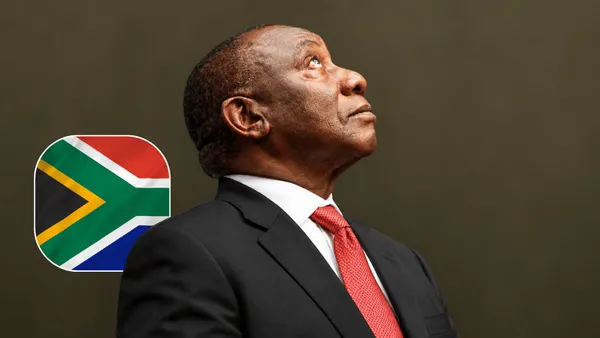
South Africa builds weapons and sells almost all of them somewhere else. More than 600 companies work in the sector, over 80% of their revenue comes from exports, and the products reach more than 115 countries, over 40 of them in Africa. Trade minister Parks Tau laid that out at a Pretoria industry conference on Monday and drew the conclusion himself: "This is not a domestic industry that happens to export. It is an export industry that happens to be domestic. Any strategy for this sector must start from that fact."
What the state stopped buying
The decline behind that framing is in the government's own numbers. Defence force buying from local industry fell from R26.2bn in 1989/90 to R850m in 2017, adjusted for inflation. Research funding fell from R6.1bn to about R500m over the same stretch. Employment across the chain went from roughly 130,000 people at 3,000 companies in 1990 to about 13,000 at 600 today. South Africa still ranked 21st in the world for major conventional arms exports between 2018 and 2023, which is an odd result for a country spending about 0.7% of GDP on defence, some R57bn to R60bn a year, against the 1.5% a 2015 review recommended.
Tau named the cause of the skills loss without hedging. Instability at state-owned entities such as Denel pushed experienced engineers and technicians elsewhere, he said, and once that expertise leaves it does not return quickly. Armscor, the state agency that buys arms, made a related point in its 2025 annual report: Denel's lost capacity had dented Armscor's image as a reliable supplier, and government austerity had pushed several defence companies to downscale or shut.
A brass foundry goes looking for partners
Denel has been making losses for about a decade and has needed nearly R9bn in bailouts. It is now inviting outside investors into its Pretoria Metal Pressings plant, which makes ammunition for the army and the police, under a process it calls Project Pearl. Bids close on 10 August. The plant's foundry can turn out up to 80 tons of brass strip a day, and Denel says it wants infrastructure renewal, capital, technology upgrades and automation while keeping state control. US defence and security firm Omusha had already signalled an investment in the hundreds of millions of rands.
What Tau asked for costs rather less: coordination. Export permits that clear faster, aviation rules that fit the drone business, a proposed aerospace and defence industrial zone in the Western Cape carrying its own investment incentives, and one national position across the trade and defence departments, Treasury, the state science council and the state's development financier, instead of parallel processes that do not speak to one another.
Africa's defence acquisition market is forecast at about $136bn. The 10 August closing date is the first small test of whether that number gets answered from South African factories or from somebody else's.