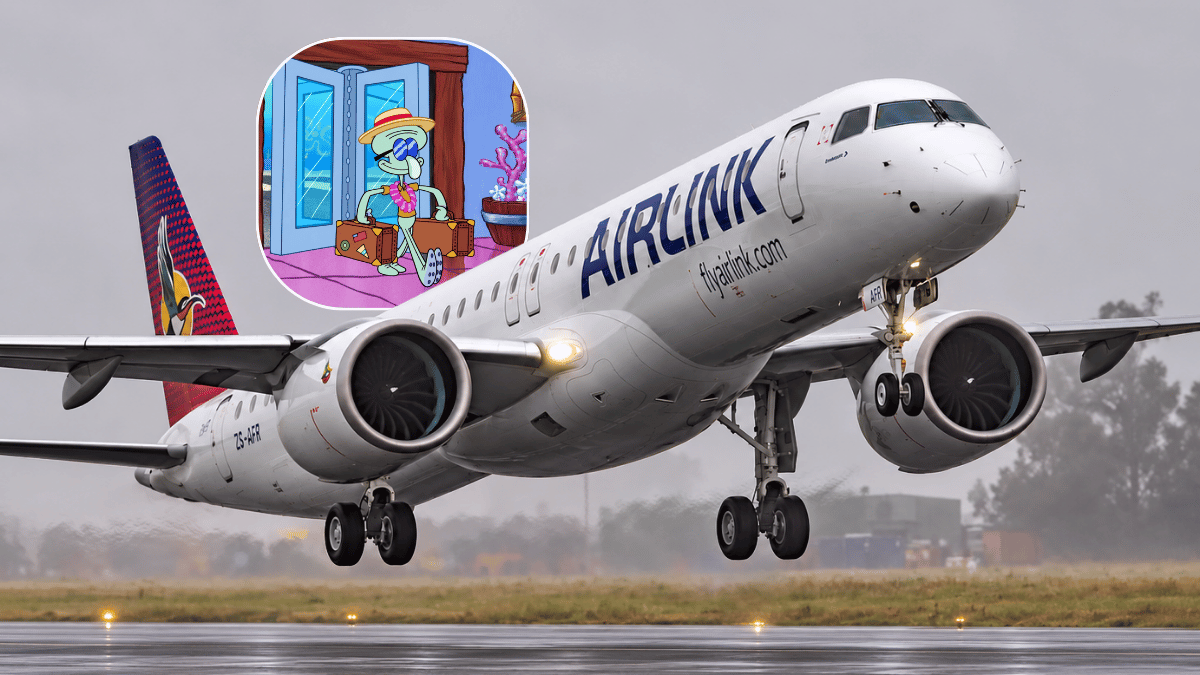
Five weeks ago, Airlink put two passenger jets less than 15 metres above a packed DHL Stadium in Cape Town, just before the Springboks played the All Blacks on 29 August. The clip went everywhere. Sports Minister Gayton McKenzie called it "spectacular", pilots raised safety concerns online, and the South African Civil Aviation Authority, which had approved the flight, started a review. Its report goes to Airlink once the assessment is finished, and none has been published.
For a few days, an airline that normally just gets on with connecting cities across Southern Africa had the whole country's attention. Now we are getting a better look at what it has been building while nobody was watching.
More people, more places
Airlink carried about 4.5 million passengers in the year to August, 5.5% more than the year before, and it is preparing for the next leg. Speaking to Bloomberg this week, chief executive de Villiers Engelbrecht laid out plans to grow the network by roughly 10%, including two more African countries. He called it probably the airline's most ambitious revenue growth year in its history, and declined to put a number on the revenue.
The map has already changed a lot. Back in 2024, Airlink flew to more than 45 destinations across 15 African countries. Today it serves 67 in 16. Flights from Cape Town to Mauritius started on Friday 2 October, twice a week, sparing Capetonians the old change in Johannesburg, and a Cape Town service to Zanzibar opened the same week.
More routes, more planes
Airlink flies only Embraer jets, more than 70 of them. Four new aircraft have arrived this year, three more are due by July, and the 10 E195-E2s it bought in 2025 should all be delivered by mid-2027. The E2 is the plane Engelbrecht credits with making the Mauritius route possible, and the airline is looking for more openings across western, eastern and central Africa.
Then there is the shareholder many of the fans in that stadium would not know about. Qatar Airways bought 25% of Airlink in August 2024, giving the South African airline a major global partner as it expands across the continent, and the two sell seats on each other's flights. Qatar Airways Group chief executive Badr Mohammed Al-Meer said at the time that the investment showed "how integral we see Africa being to our business' future".
Airlink spent years building a much bigger African business without being a household name. One low pass over a rugby stadium changed that almost overnight, and the plan behind it is a good deal bigger than the stunt.